
Summary #
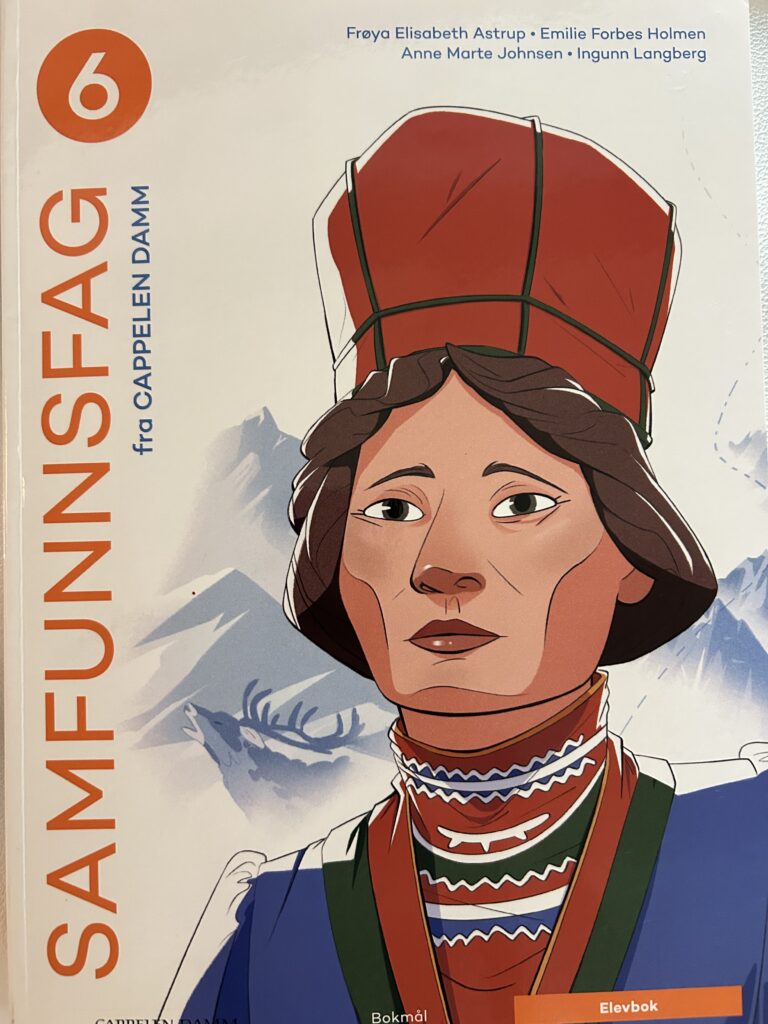
Chapter 5 of Social Studies 6 from Cappelen Damm thematizes exclusion and diversity, and uses the story of Ole-Henrik – who is both Sami and queer – to illustrate how one can experience double exclusion. The textbook highlights gender identity and sexual orientation as equally natural and innate aspects of identity as ethnic background. When sexual orientation and gender identity are equated with ethnic background, without nuance or academic counterbalance, a one-sided norm is promoted that does not allow for real diversity in thinking.
Children here get the impression that feelings and experiences of gender and orientation are stable, innate and must be confirmed, without room for critical questions or biological anchoring. It is communicated that one is queer in the same way as one is Same – as something that cannot be questioned. This makes gender identity a kind of new innate characteristic, despite the fact that research shows that identity experiences can be both temporary and influenced by environment and culture.
The textbook then reveals that Ole-Henrik has chosen to put “Sami” on the shelf for a while, and no longer identifies as such, while later in the same article he claims to be proud Sami. It is confusing.
The chapter also focuses critically on dividing clothing into «boys» clothes« and »girls’ clothes,” and opens up a more fluid view of gender. This may seem inclusive, but in practice it contributes to blurring the biological distinction between boys and girls. This creates confusion in children and weakens a secure anchoring in body and gender.
The textbook promotes an ideological understanding of gender and identity, where biological reality is downplayed in favor of subjective feelings and social recognition. There is a lack of critical reflection on the consequences of this, both for the child's self-understanding and for the ability to build a stable identity. Underlying such thinking is the concept of "intersectionality", which is anchored in the government's action plans, for which we have made a info video about here.
Chapter 5: All Together #
Competency goals:
- Understand that people can belong to multiple identities at the same time (e.g. both Sami and queer)
- Reflect on how it feels to be outside the community
- Talk about why some people are not always accepted for who they are
- Finding out how we can make society more inclusive
- Practice showing respect and understanding for people who are different from us
- Assess what is fair and unfair in dealing with different minorities
- Become aware of your own attitudes and how we influence others
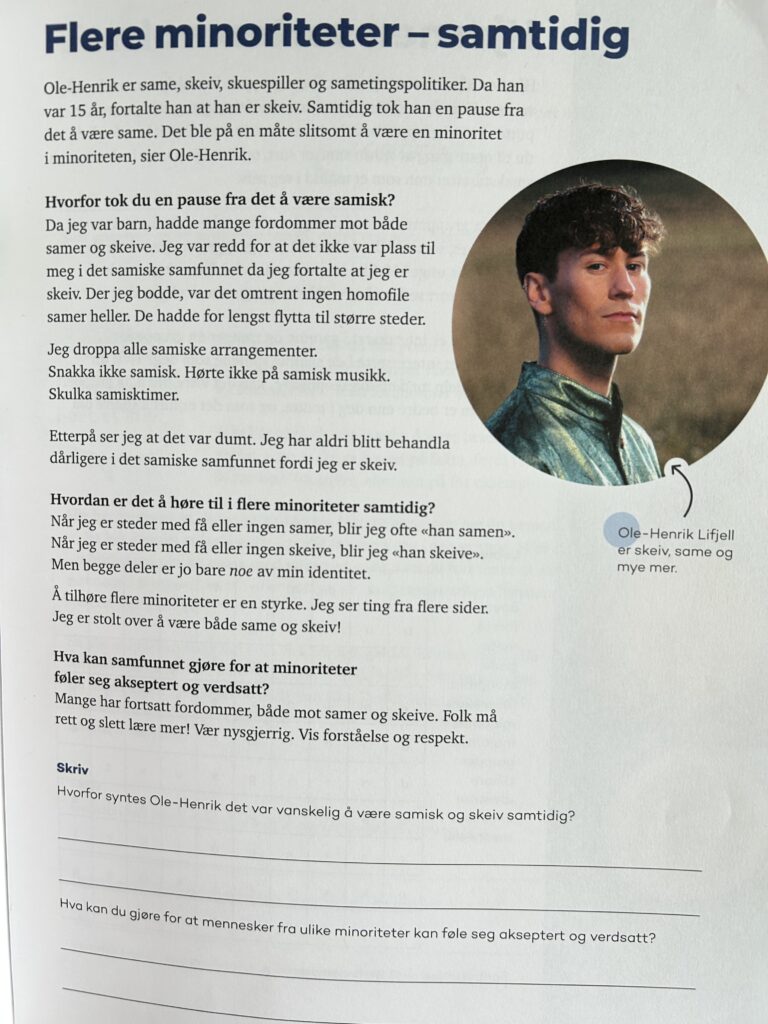
This text highlights outsiderness by showing how it can be difficult to be both Sámi and queer. The message is that all identities must be met with understanding and recognition. At the same time, sexual orientation is presented as just as innate and unchangeable as ethnicity – with no room for critical questions or alternative views.
By equating orientation with background, an ideology is propagated where feelings define truth, and where support means full consent. It leaves little room for values based on marriage between a man and a woman, biological sex, and moral responsibility. Students learn that difference must be accepted – but not that there are boundaries, purpose, or truth about who we are.
Underlying such thinking is the concept of “intersectionality”, which is anchored in the government’s action plans, for which we have created a info video about here.
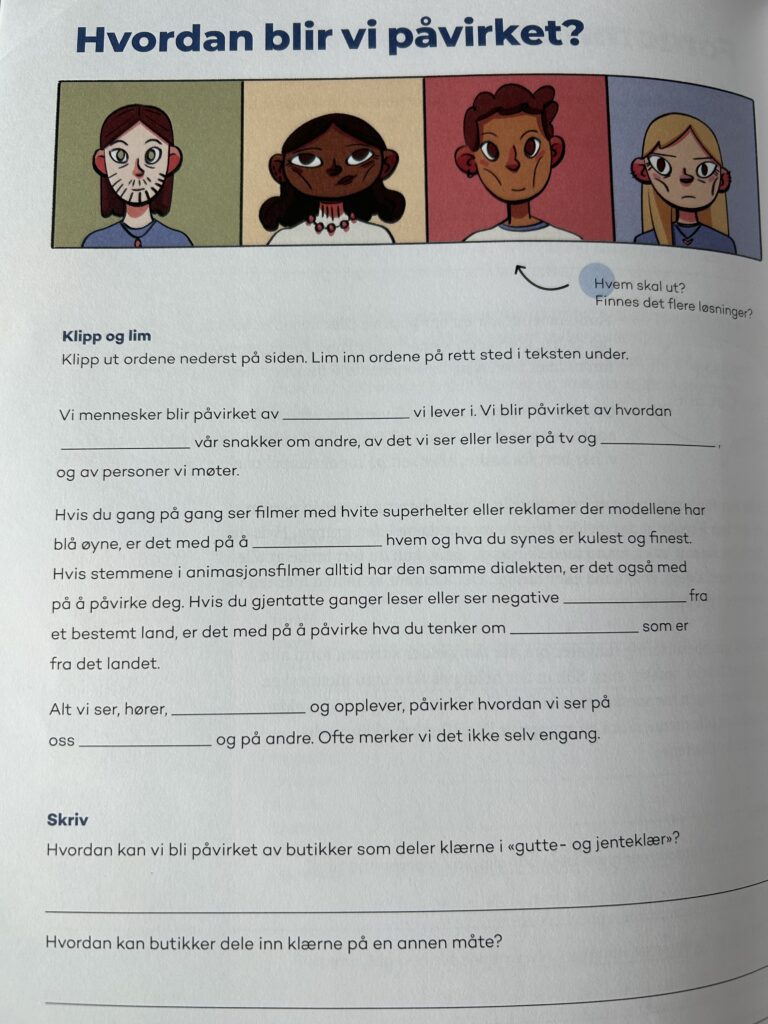
This thesis is about how children are influenced by their surroundings, and questions why clothing is divided into "boys' and girls' clothing." The topic is relevant, but the presentation is one-sided.
The paper suggests that gender roles are simply the result of influence – without mentioning biological differences or that some children thrive with clear gender frames. It gives the impression that all differences between boys and girls are artificial and should be broken down. This is not true, it is ideologically promoting a form of class division.
By focusing only on influence and norm criticism, the textbook contributes to weakening children's security in their own gender identity. It lacks balance and space for alternative perspectives.


