
Chapter 7: Girls and boys #
Summary #
In Mylder 3, the terms “gender identity” or “gender diversity” are not found, instead the terms “gender roles” and “gender expectations” are introduced. These terms are related to “gender identity” as it was the same sexologist, Dr. John Money, who invented the terms “gender identity” and “gender role”.
The content of the textbook focuses heavily on “norm criticism” that stems from queer theory, that girls and boys are not different. But that stereotypes pressure children to be something they are not. The solution is presented that “all children have the right to be themselves”. This is a slogan and mantra within queer theory, and is continued when it comes to gender and gender identity and sexuality later in school.
It is clear that the book prepares students with rhetoric and norm criticism, which we find again in Cappelen-Damm in the 4th grade, where the rest of the conceptual rhetoric is introduced. Although Mylder 3 is not the worst in the class, the material is aimed at norm criticism with the mantra “be yourself” as preparation for queer theory in the 4th grade.
Here you will learn:
– what are expectations
– about expectations for boys and girls

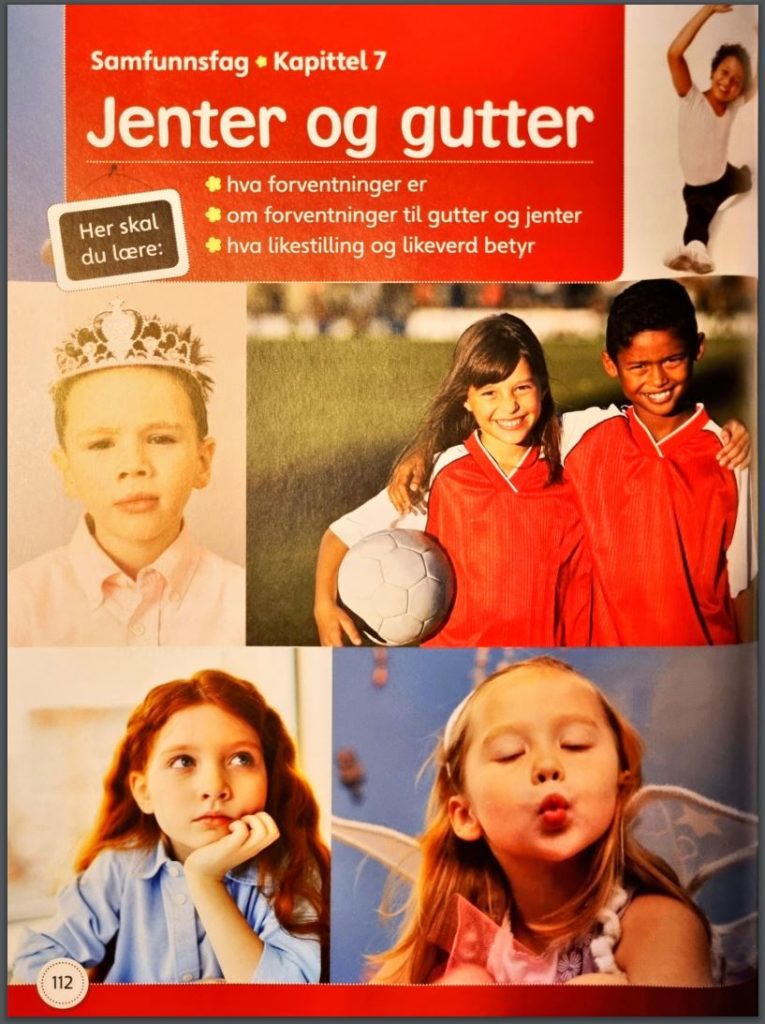

Excerpt from pages 119 and 120: #
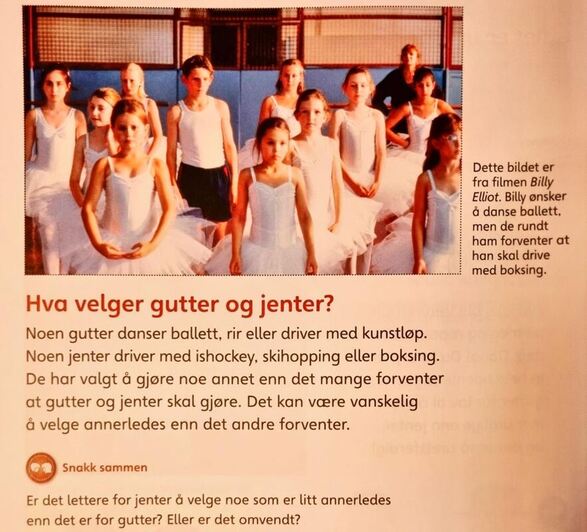
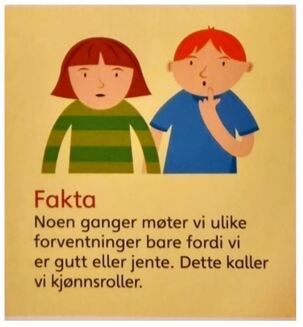
Excerpt from page 122 #
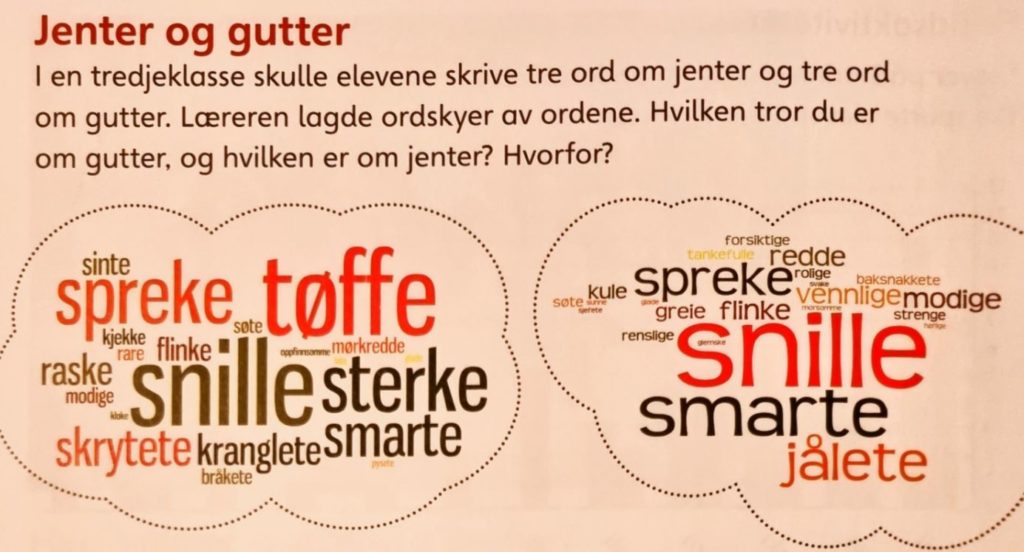



Reflections #
At first glance, this chapter seems harmless and straightforward. But there is something that is also actively used in queer theory and activism, call it a mantra, which is repeated by queer interest groups, politicians and activists:
«"Everyone should be able to be themselves as they are"«.
Children learn in Mylder 3 from the content, in the summary and from the questions that It is a right to be yourself.. But the defined right does not exist in the Norwegian Laws or in human rights. It is rather a mantra that is repeated without substance, which everyone agrees with, but it is not a defined right. Claiming that it is a right to be yourself is more of an invitation to do as you please and break norms if you feel like it without it having any meaning for anyone and no one has the right to react negatively to norm violations.
On Government websites we can read that the government is stepping up efforts for queers with a new action plan: "– It should be a given that everyone should be able to be who they are and love who they want. Skeive's fight to be themselves is one of the most important freedom struggles in Norway.» Says Minister of Culture and Equality Anette Trettebergstuen.
Chapter 7 reiterates that one should be critical of stereotypical gender roles and expectations. And there is nothing wrong with criticizing societal norms. But if we look at SkeivKunnskap.no, (FRI Association), much is similar to Mylder 3:
Body and expectations <– Link
Based on the appearance of our bodies at birth, we are assigned a legal gender as either female or male. Based on how our bodies look, and therefore our legal gender, we are socialized into a gender role as either boy or girl. We are expected to see ourselves as girls if we have a vulva and as boys if we have a penis and testicles. We are also expected to conform to a range of ideas about what is “girly” and “boyish” or feminine and masculine.
We can partly recognize this text from Mylder 3 for 8-year-olds, apart from the legal gender at birth, which is introduced from the 5th-7th grade. The text seems harmless. But then the idea of "breaking the norm" is introduced. "Breaking gender roles" or "breaking the heteronorm" is central to queer theory and is something that is reflected in the communication from queer interest organizations:
When we violate gender norms, we do individual actions or behave in ways that differ from the cultural norms and expectations that exist for gender in society. Some people may not identify as a gender, or as a gender other than the one they were assigned at birth. Others identify as the gender they were assigned at birth, but have a gender expression that is interpreted as atypical or norm-breaking. Still others may have a typical gender expression, but do individual actions that violate gender role expectations for girls or boys.
In queer theory, the goal is to encourage a norm violation. If no one breaks the norm, no one is «queer». Everything that is called heteronormative is not queer. Children will later be encouraged to break the norm because everything is to be normalized, a new norm is to be established. Any form of behavior, expression, pronouns, new genders and new sexualities all need protection and safeguarding from the heteronorm in the form of special rights and financial support. Everything queer should be normalized, but still be queer.


