
Chapter 3: Identity - who are we? #

Summary #
Arena 8 tells students that the gender you are born with does not have to be the gender you experience yourself as – then introduces the idea of gender identity, defined as the perception you have of yourself. The two-gender norm is defined as “the idea that there are only 2 genders”. These are radical undocumented claims.
The textbook also claims that gender can be changed by referring to people who identify as trans who have undergone hormone therapy and surgical procedures on their bodies. This is another disturbing example of uncritical communication of gender, where gender identity is portrayed as the determinant of which gender you are.
The social studies textbook romanticizes body-altering medical interventions by pointing out that this has been positive for Emma Ellingsen and other trans people. The book lacks critical reflection on such irreversible interventions, and does not refer to the negative consequences this leads to, as revealed in the Ukom report and the Cass report. The Norwegian Institute of Public Health is also critical of gender-correcting treatment because there is a lack of science indicating that it has a positive health effect, and in addition, several cases of people who regretted it have come to light in recent years. The book throws out biological sex and personality, and replaces them with gender identity. It is a reprehensible representation of the school textbook.
About the textbook #
Key competence goals: #
Key competence goals: #
Identity #
Click on the images for full view
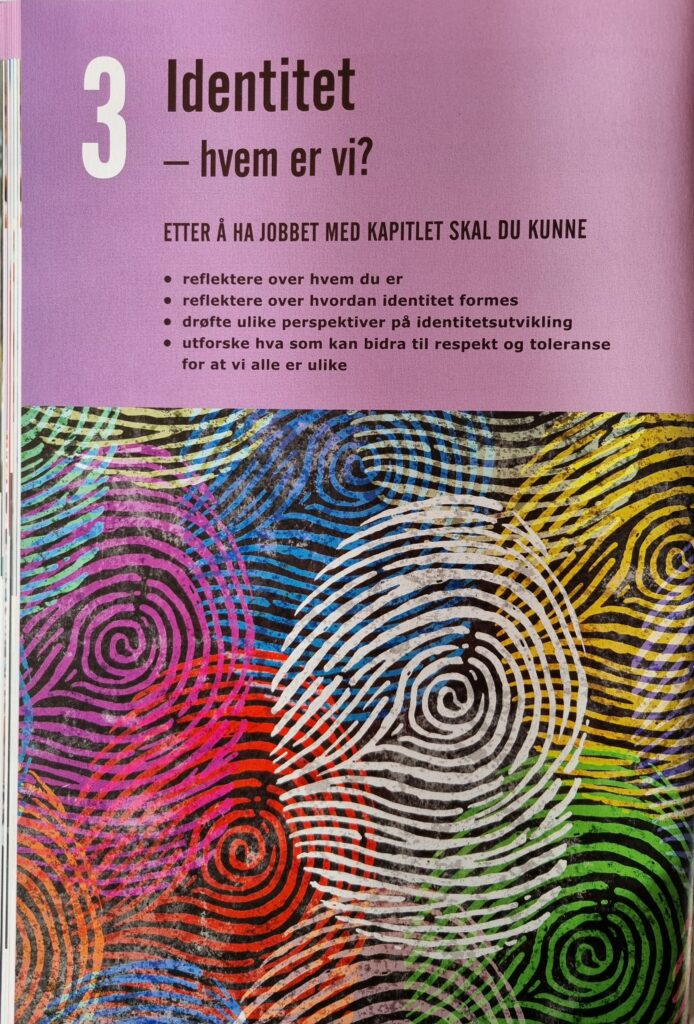
The chapter focuses on identity and identity development. One of the goals after working with the chapter is for students to reflect on who they are and how their identity is formed.
As with other textbooks about identity, we also see here that gender identity is presented as a central role in the individual's identity.
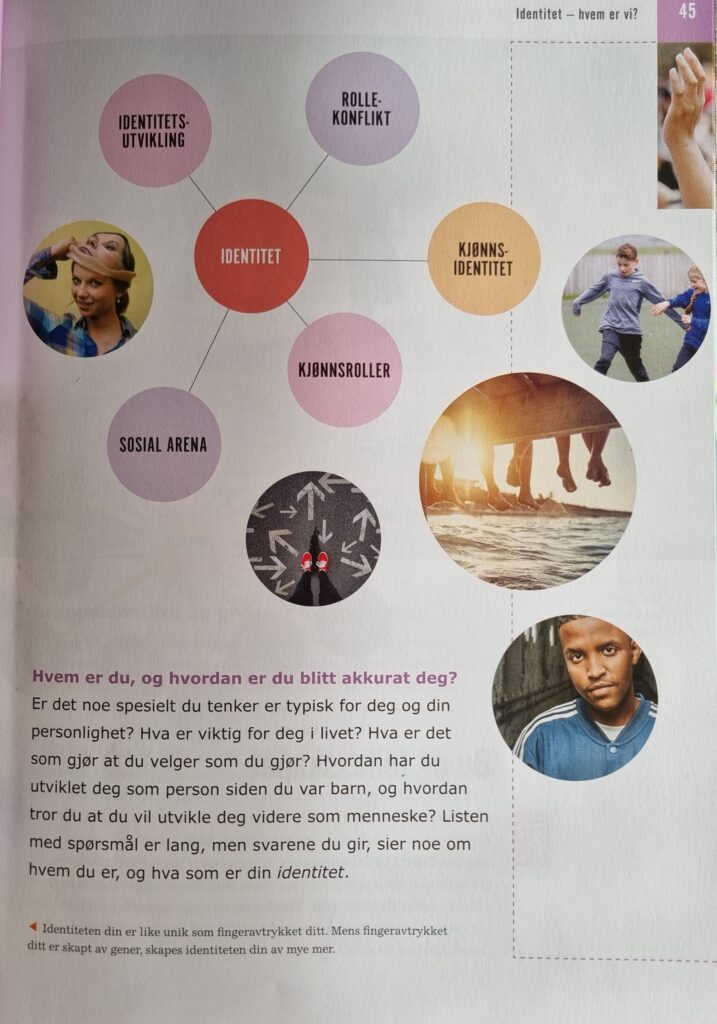
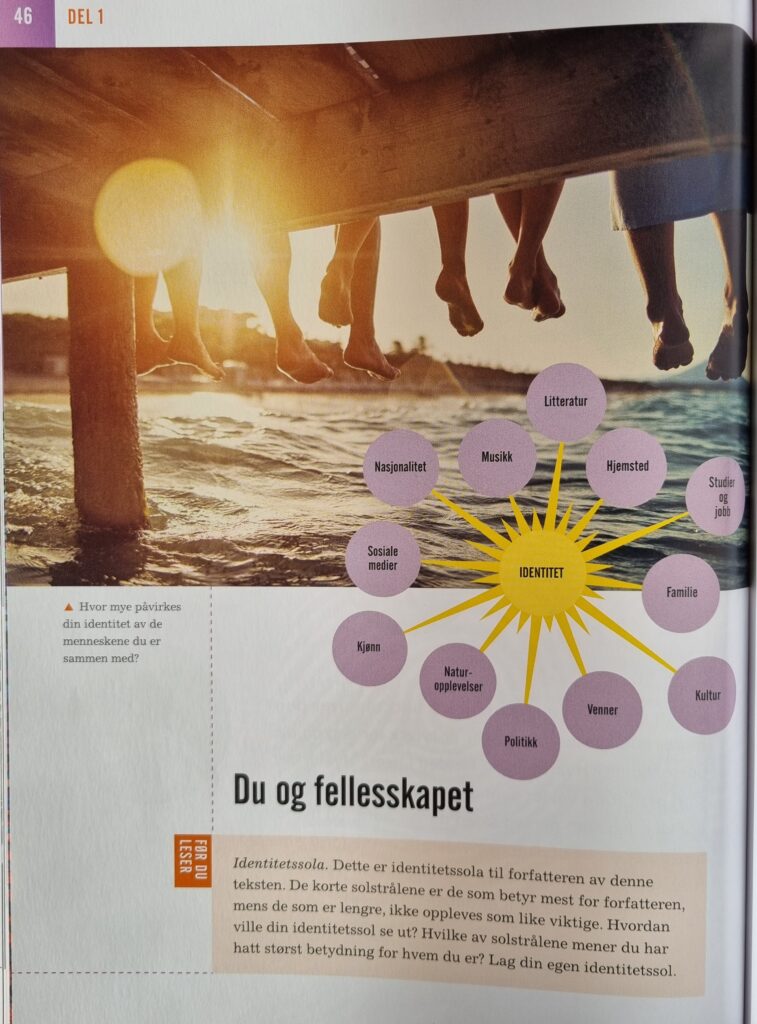
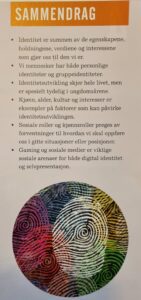
The identity sun, created by the author, is intended to show which elements are important in connection with identity. Here, gender is placed a little far out to show that this does not necessarily have a great importance for who you are. At the same time, gender identity is conveyed as an essential part of one's identity. Identity is a larger psychological and philosophical question than, for example, that gender and nature experiences can be equally weighted for a person's identity.
Gender roles #
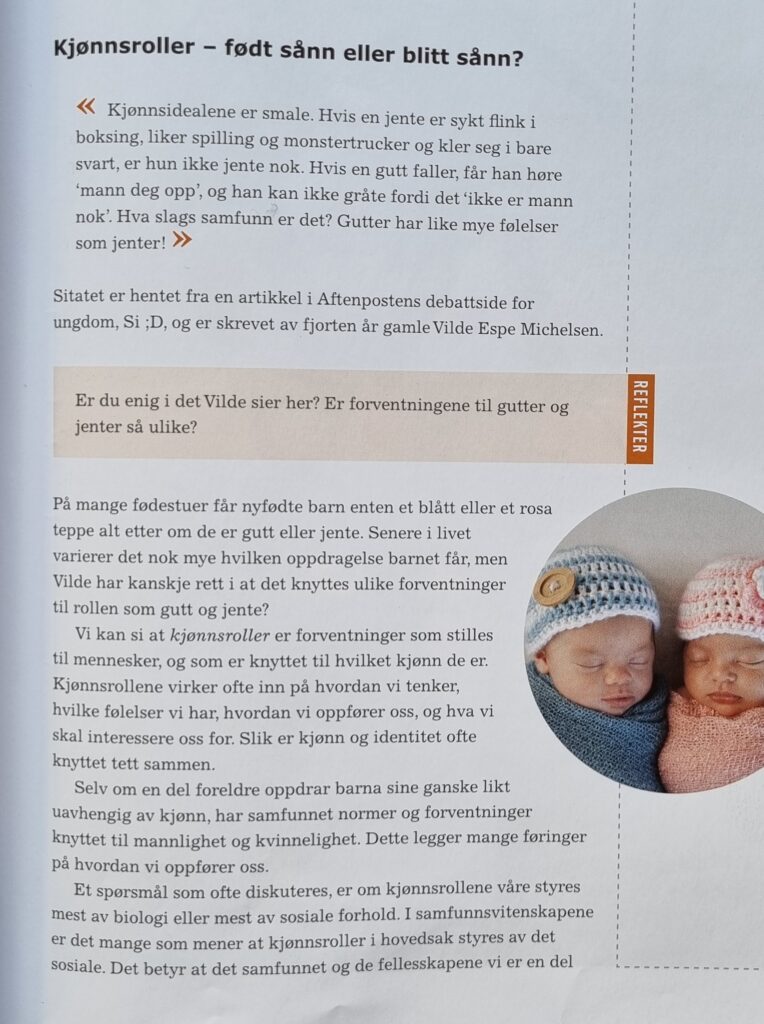
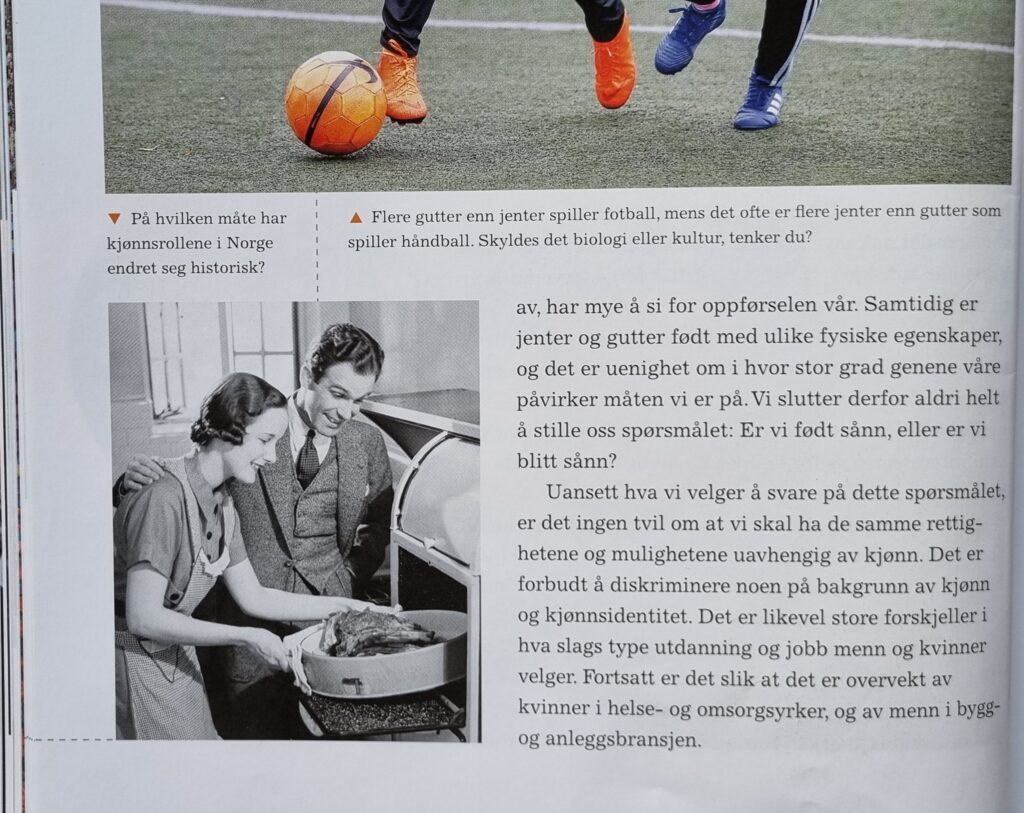
The chapter focuses on gender roles, and problematizes the expectations society has for the role of boy and girl. The book asks questions about what is biologically determined, and what is a result of social conditions. In Norway, everything indicates that women and men still choose differently because of their biology – that in the world's most equal country, women and men choose a direction for education and work differently based on their gender. This confirms that there are biological differences that are expressed in professions and interests, a reality that Norwegian school textbooks do not emphasize.
It is pointed out that «It is prohibited to discriminate against anyone on the basis of gender or gender identity.» This is enshrined in Norwegian law, but there is no critical reflection on the negative consequences this has for women in particular.
For example, there are issues such as the wardrobe issue, where biological men who identify as women demand to use women's wardrobes. Here, LGBT activists argue that it is prejudiced to expel males from women's wardrobes if they feel like women. While the rights women have to safe spaces, their own facilities, women's sports, their own prisons and the like are erased the moment biological men enter what was intended for women.
Gender identity #

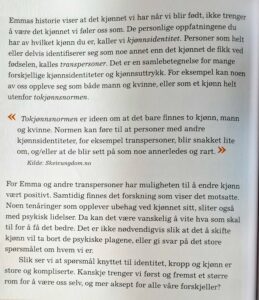
Arena 5 presents gender identity, a problematic and unclear concept. The concept refers to the fact that your subjective experience determines your gender. In the text about Emma Ellingsen, it is claimed that gender can be changed, which is not true.
The textbook also presents hormone therapy and surgical interventions, and indicates that for Emma and other people who identify as trans, such irreversible interventions have been positive. It is mentioned in this context that: «at the same time, there is research that shows the opposite» (a hint of critical reflection). Yet the textbook does not provide any concrete examples of how risky this actually is.
It is very serious that the textbook gives such a positive image of such invasive treatment on healthy bodies. It gives students the impression that such types of interventions can solve children and young people's life challenges around gender confusion. At best, this is wrong, and at worst, it can lead vulnerable
into irreversible treatment with a high degree of negative after-effects and regret.
Chapter assignments #
Click on the images for full screen view


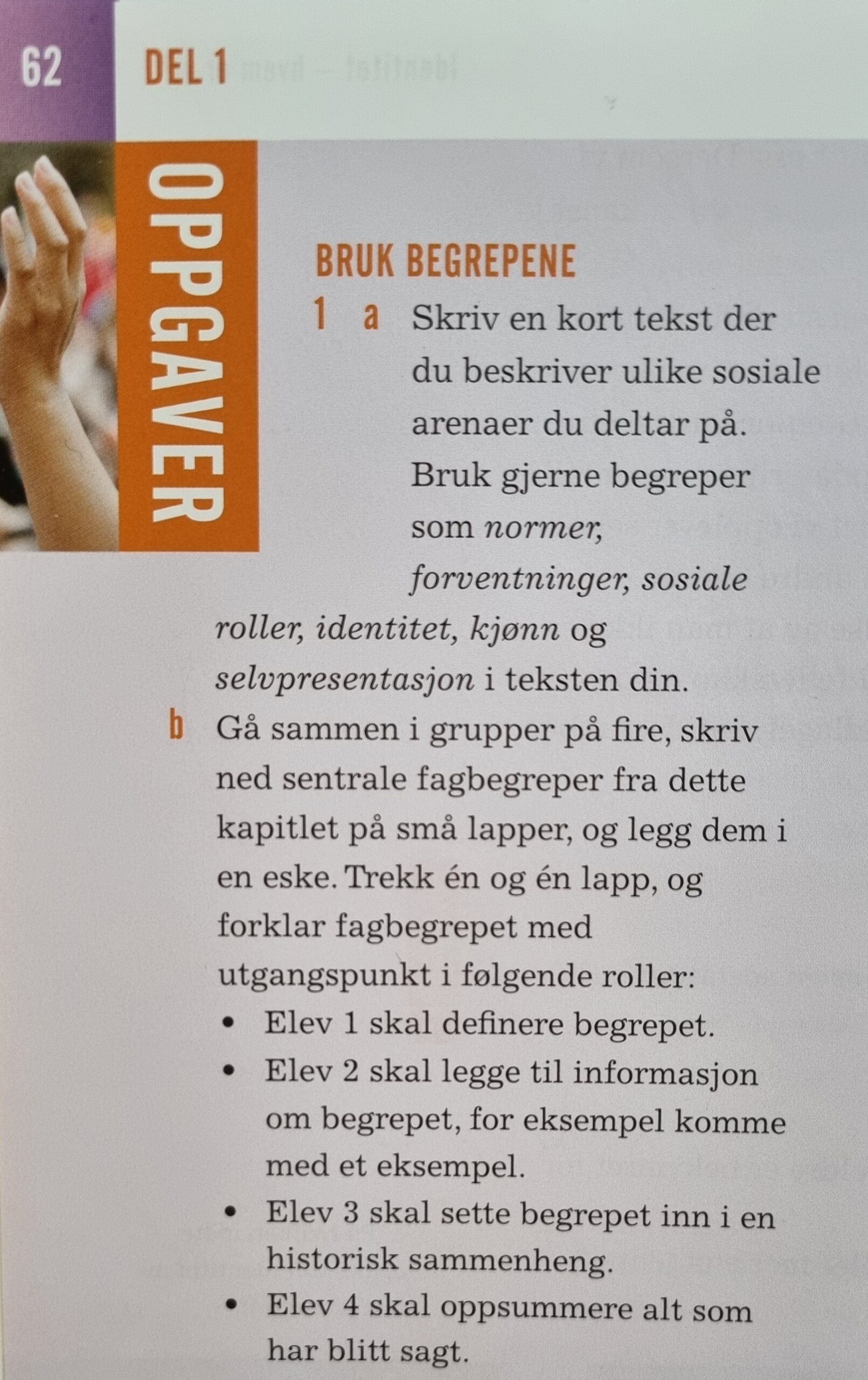
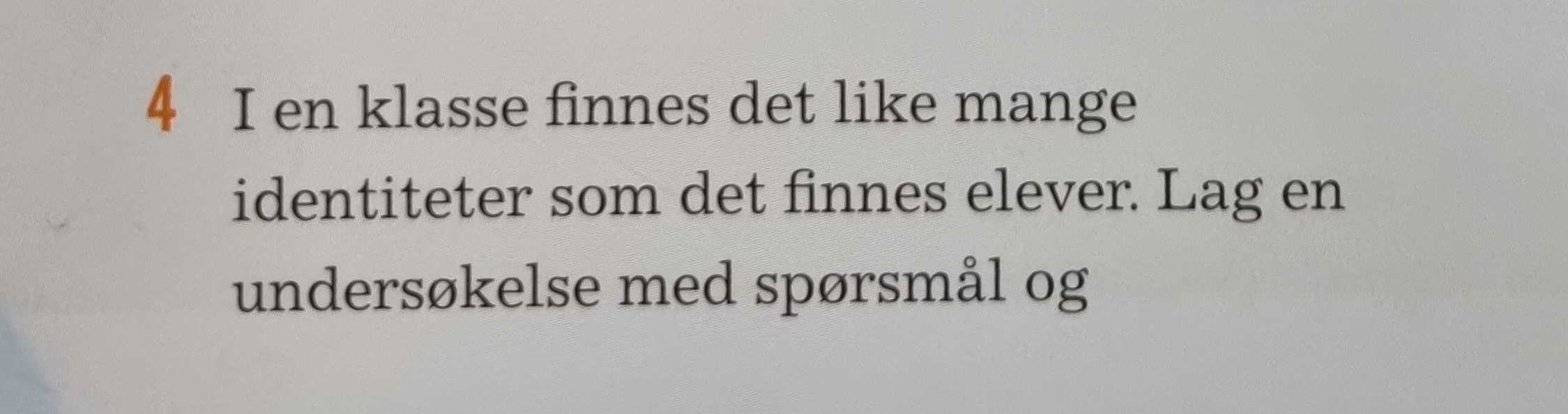
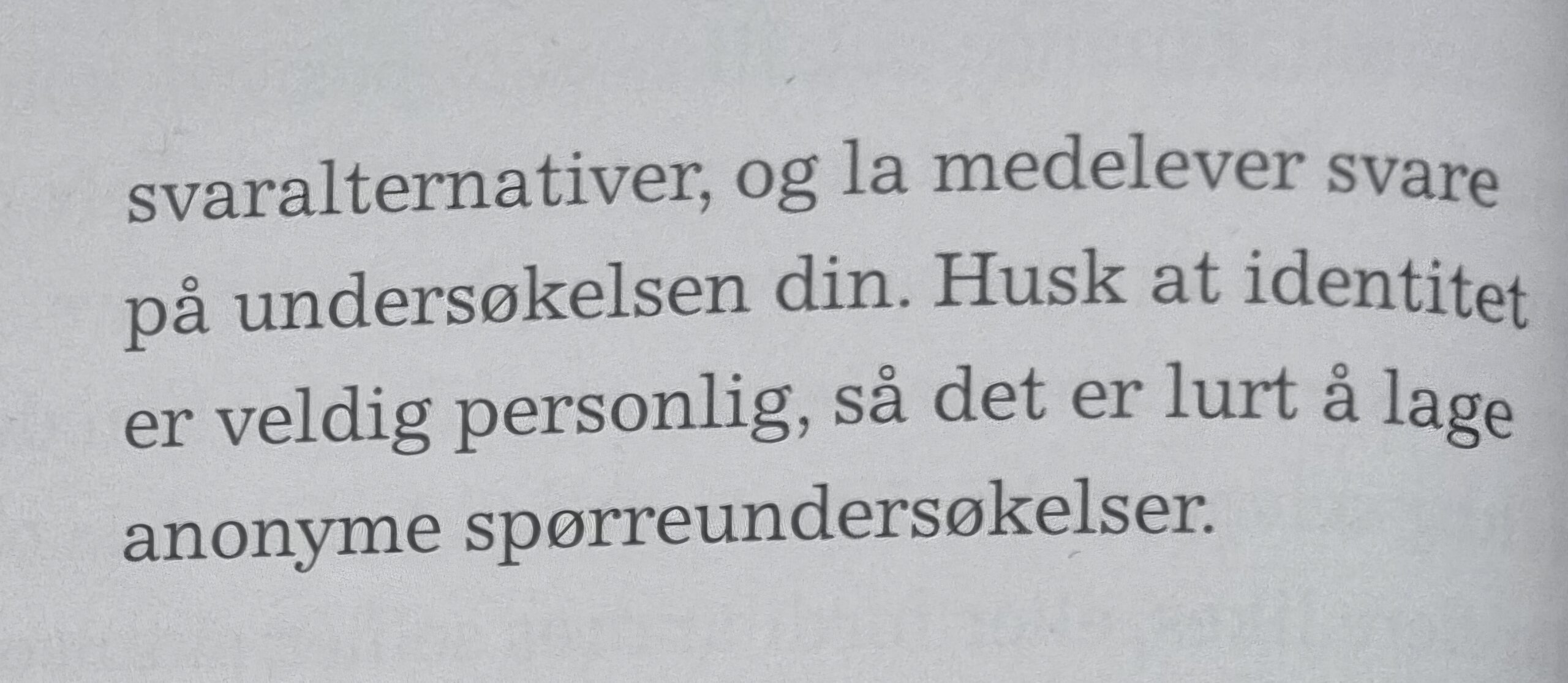
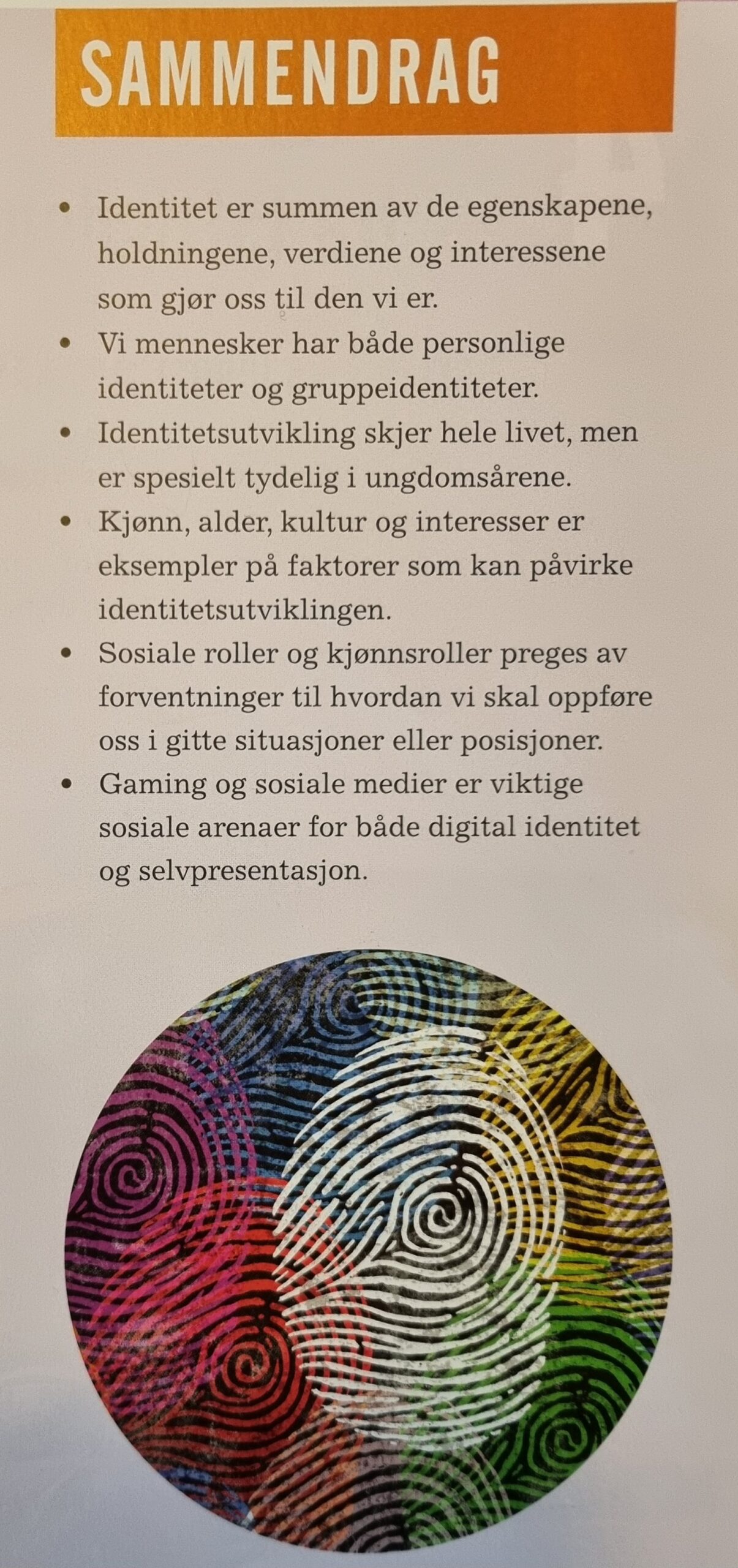
The chapter has a strong focus on identity, where gender is a part of identity that is emphasized. The book conveys that gender and expectations of gender influence identity development, but that the unscientific concept; ”gender identity” overrides biology. What you feel you are, you are. You can criticize the textbook for claiming that you are your feelings. Which is not true.


