
Chapter 4: What happens during puberty? #
Summary #
Science 6 by Cappelen-Damm has most of the queer theory. Including a film that seems indoctrinating and invading the students in understanding gender in a new way. The book conveys misinformation about the number of biological sexes, and includes “intersex” as a third gender and adds “transgender” to the mix of the number of genders. This is seriously wrong, and is used to convey “gender diversity”. The book introduces several concepts from queer theory, “gender identity” and “sexual identity”, and suggests that during puberty, young people find out more about who they are. While the truth is that the confusion increases most during this time, and that it is only after puberty that people find out “who they are”. Hence the law on sterilization which states that the brain is not fully developed until the age of 25, therefore no one can be sterilized before then.
Students should learn that they can be “non-binary” and the teacher should, as part of the teaching, “preach” stories of young people who realize that they are something other than a boy or a girl. If students are confused by the teaching, the textbook will refer them to young.no. On Ung.no there are many horror examples of sexologists giving bad advice based on queer theory to gender-confused youth.
Key competence goals: #
Interdisciplinary topics: #
Science 6 from Cappelen Damm conveys misinformation to students. The textbook presents so-called gender identity as the determinant of what gender is. It is also claimed that there are multiple genders, and that gender is something that can be changed. Students are presented with different concepts understood from the idea of self-perceived gender (gender identity): trans and non-binary. Through conversation tasks at the end of the chapter, it is planned that children will be exposed to gender confusion, by hearing personal stories from young people who are not sure about their biological gender. One of the goals of this chapter, formulated in the teacher's guide, is for students to understand themselves better. In our opinion, the communication could result in the opposite. The film recommended below in the work on this topic will also contribute to further confusion.
In the chapter "What happens during puberty," students will learn about why we go through puberty, and what the process is like for girls and boys. In connection with puberty, students will also learn about gender identity and sexual identity.
A core element of the chapter is Body and Health. The teacher's guide emphasizes that one of the goals of the chapter is for students to understand themselves better, and the importance of openness about sex, gender identity and sexual identity. It is pointed out that by normalizing thoughts and feelings, this can help strengthen students' self-esteem. Various links and inspiration are recommended when working with this chapter, here is a selection from the teacher's guide:
- Sex and society.no
- Videos from skolenmin.cdu.no (requires license)
The video is recommended for work on the chapter on puberty and identity (available on Cappelen's digital learning universe Skolen) and is intended for grades 5-7. The following can be found in the teacher's guide from Skolen:
Who are you really? This is a difficult question to answer, and puberty doesn't
easier to answer that. Watch the movie.
To the teacher: #
Fact film about puberty and identity. Puberty causes us to develop an identity that is more holistic than when we were children, both when it comes to gender identity, sexual identity, interests and relationships. Interdisciplinary introduction to the topic that addresses the biological processes in the brain, as well as identity development and relationships.
Puberty #
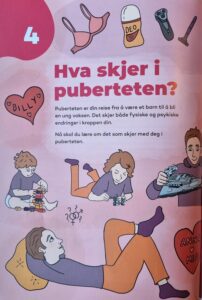
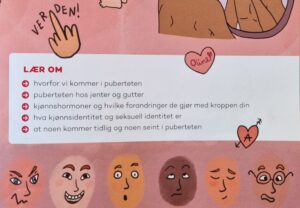
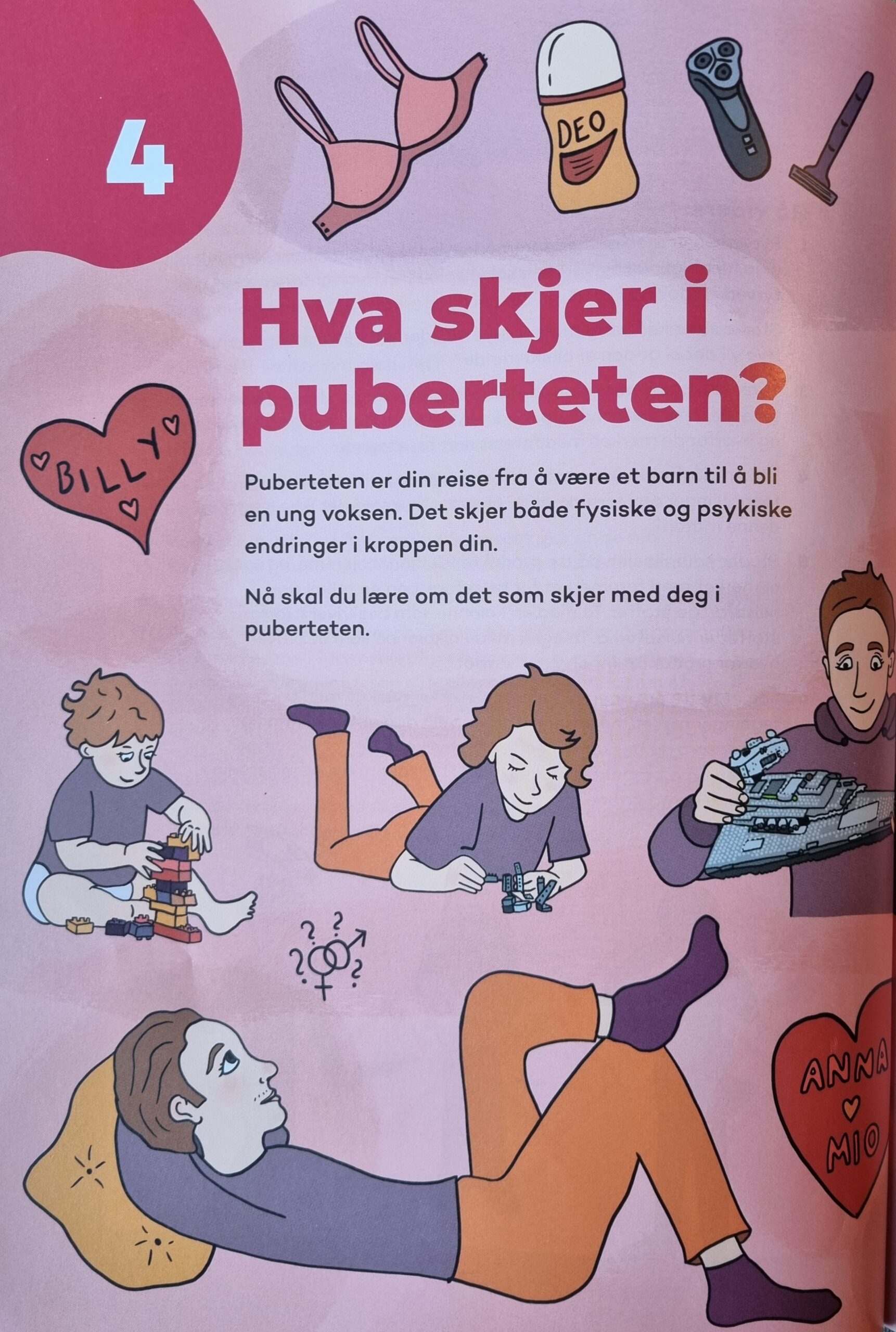
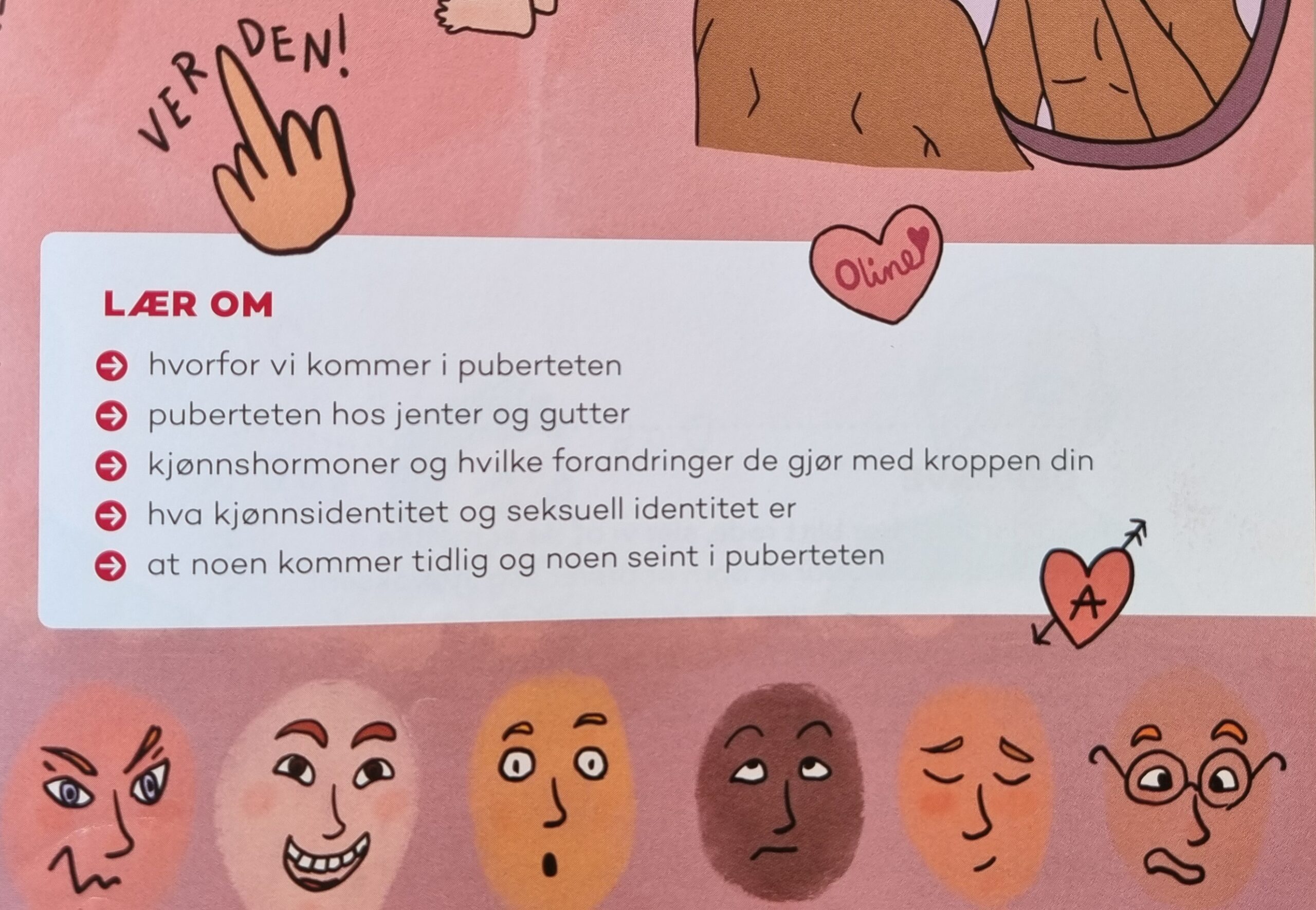
In the introduction to the chapter, there are several pictures that the students should discuss. The drawing of the boy lying down and thinking should symbolize thoughts about sexuality and
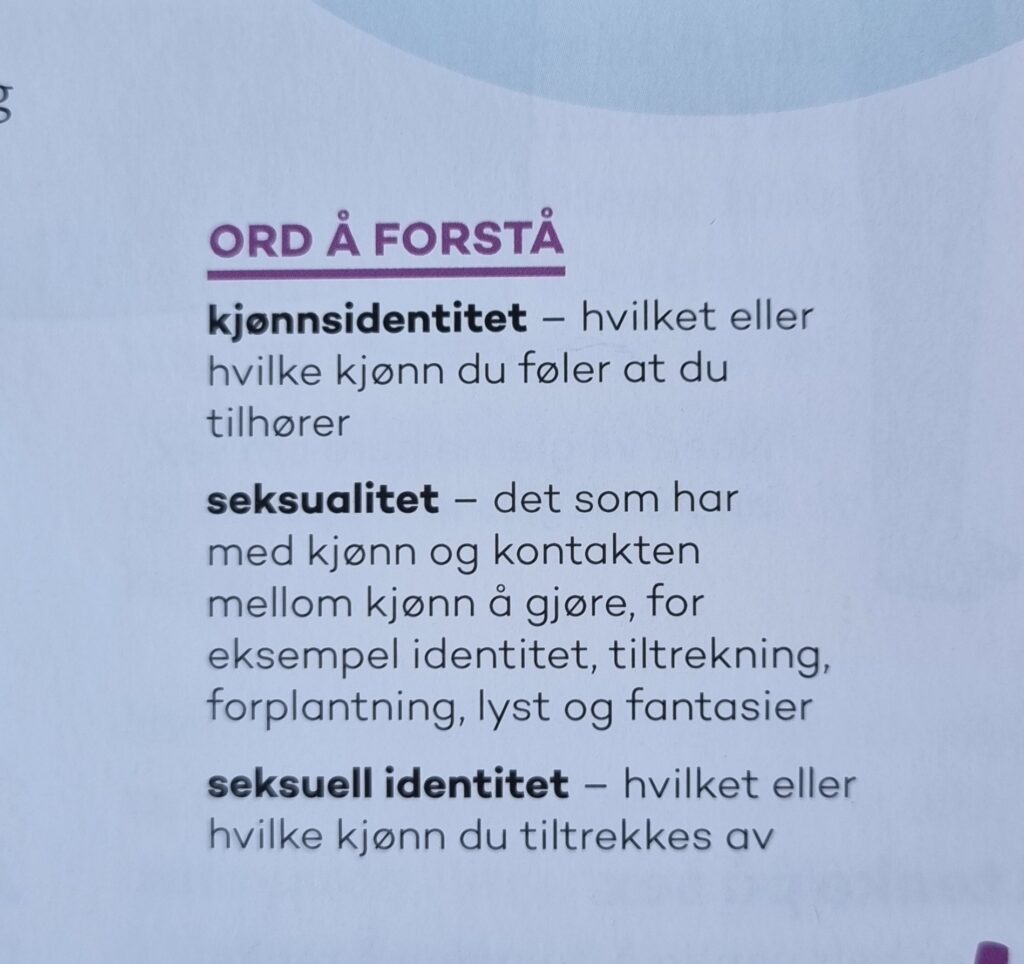
Gender identity. In the points below about what students should learn, one sees that gender identity is emphasized.
Everything is chaos! #
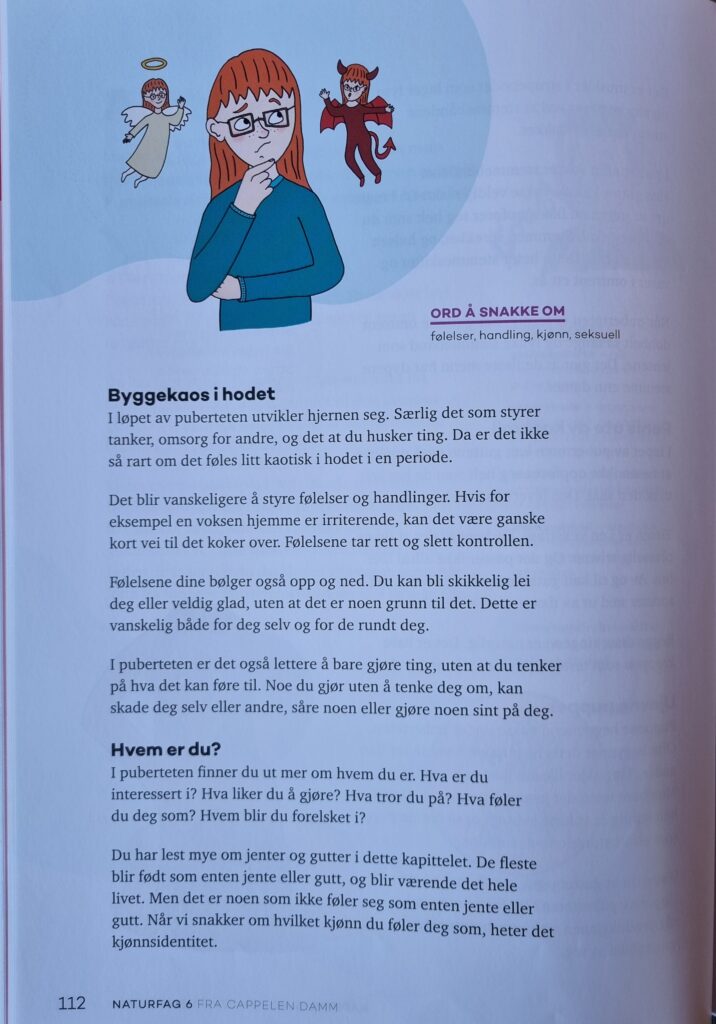
The students are presented with the idea that during puberty you will also find out more about who you are, including what you feel like. The textbook says that most people are born as a boy or a girl, and remain so for the rest of their lives. It also talks about gender identity, which is understood as the determinant of who you are, what determines what you will remain as later in life.
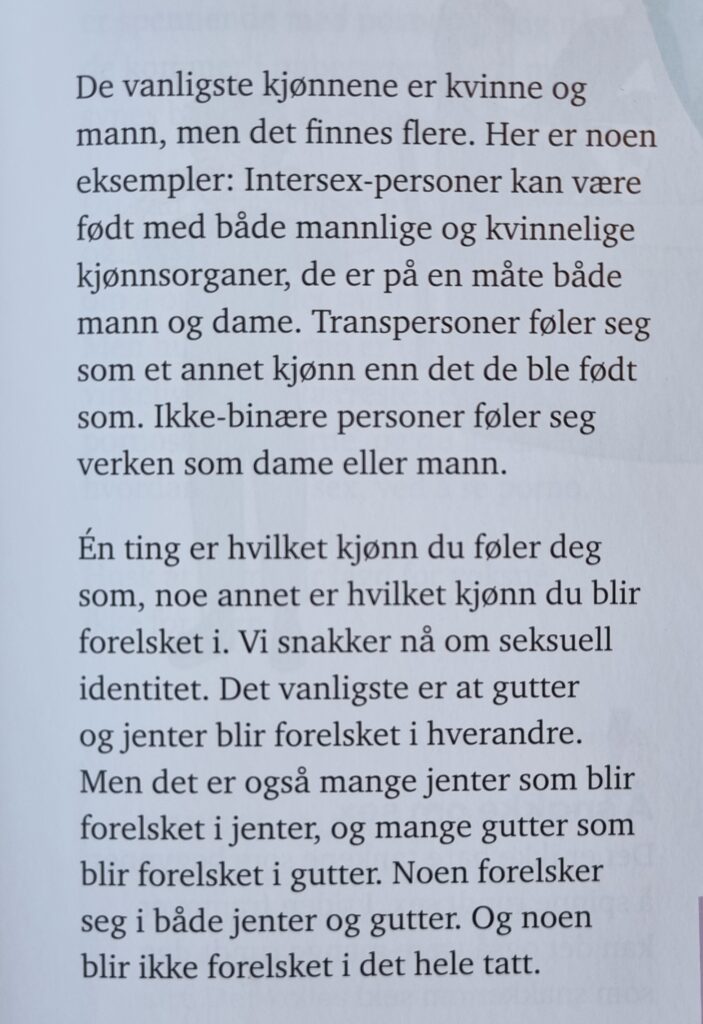
Students are informed that there are more genders than just male and female. So, gender is not binary. We find the usual argument that is often used to validate this, intersex is presented as a separate gender category.
Furthermore, students are presented with different gender categories, understood based on the idea of self-perceived gender (gender identity): trans and non-binary.
The chapter also has a strong focus on sexual identity. Students will therefore both reflect on which gender they feel like, but they should also reflect on which genders they are attracted to.
As in most textbooks on gender and identity, gender identity is an important focus word. A term that in reality replaces gender in newer textbooks.
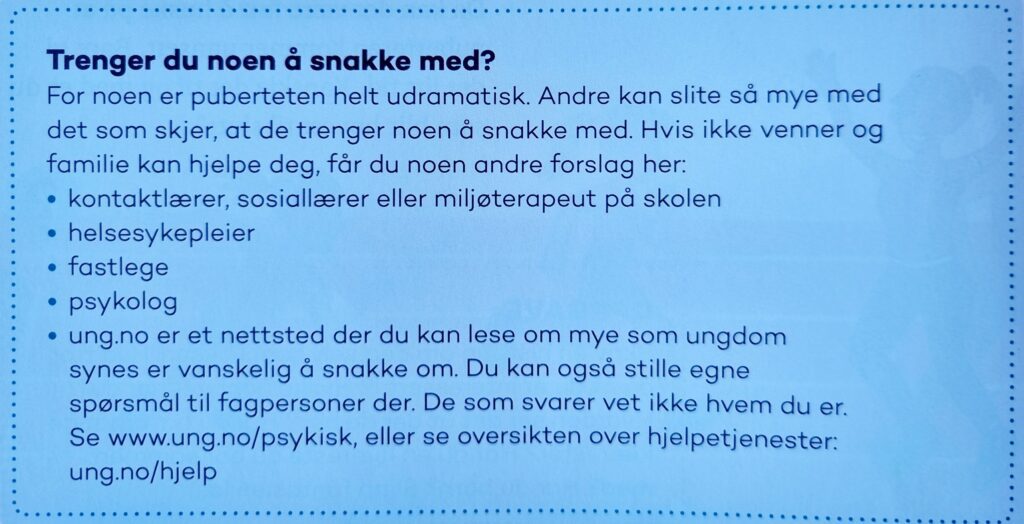
If students need to talk to someone about puberty and identity, they are encouraged to contact ung.no, among other things. This is a state-funded information channel for children and young people, and has been criticized for, among other things, promoting the idea of self-perceived gender and so-called gender-affirming treatment.
Many young people who are unsure of their gender turn to this questioning service. In very many cases, hormone therapy mentioned by health nurses/specialists in sexological counseling, also to those who have experienced confusion for a shorter period of time. Young people are told that it is actually possible to change gender.
Chapter assignments #

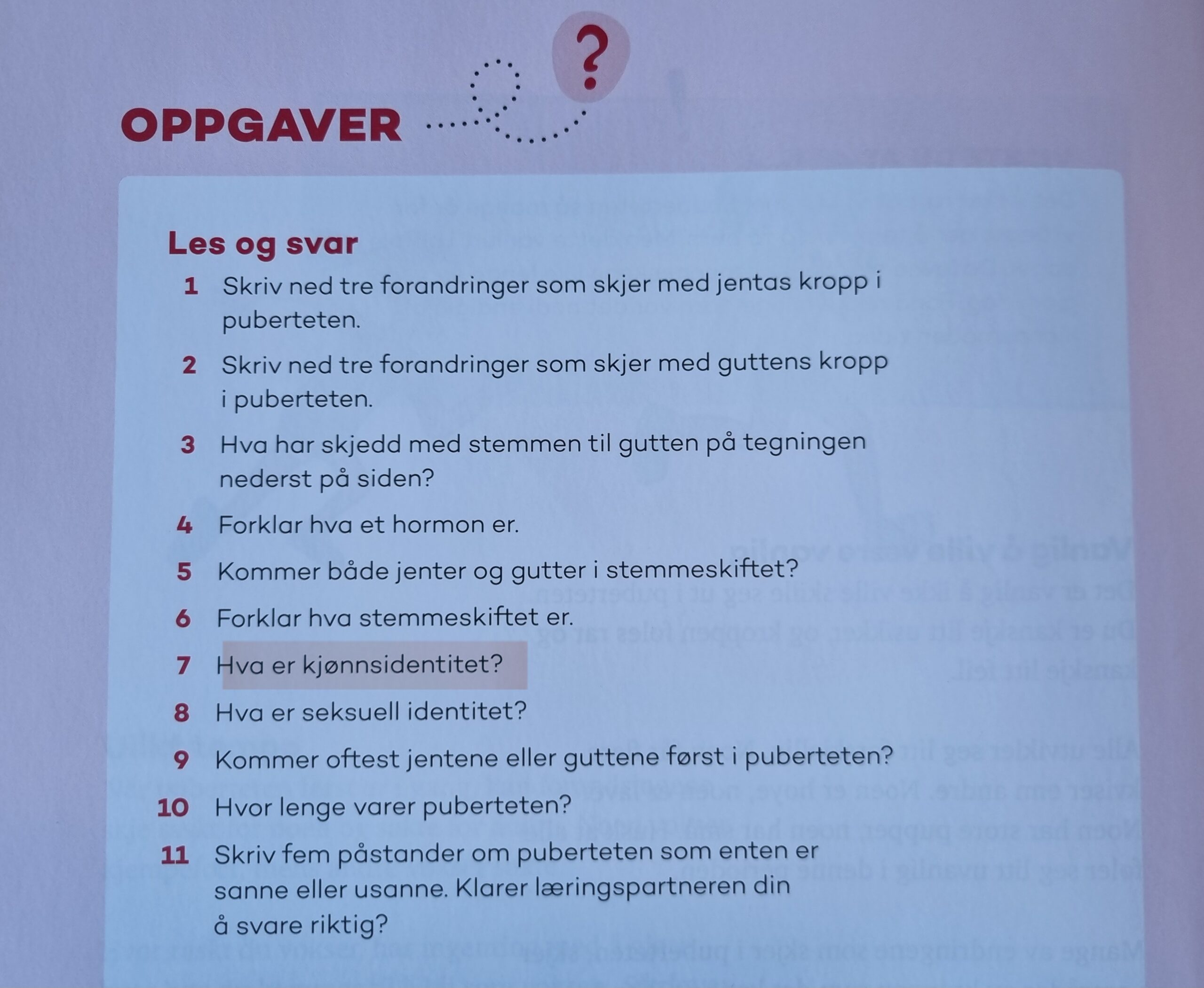
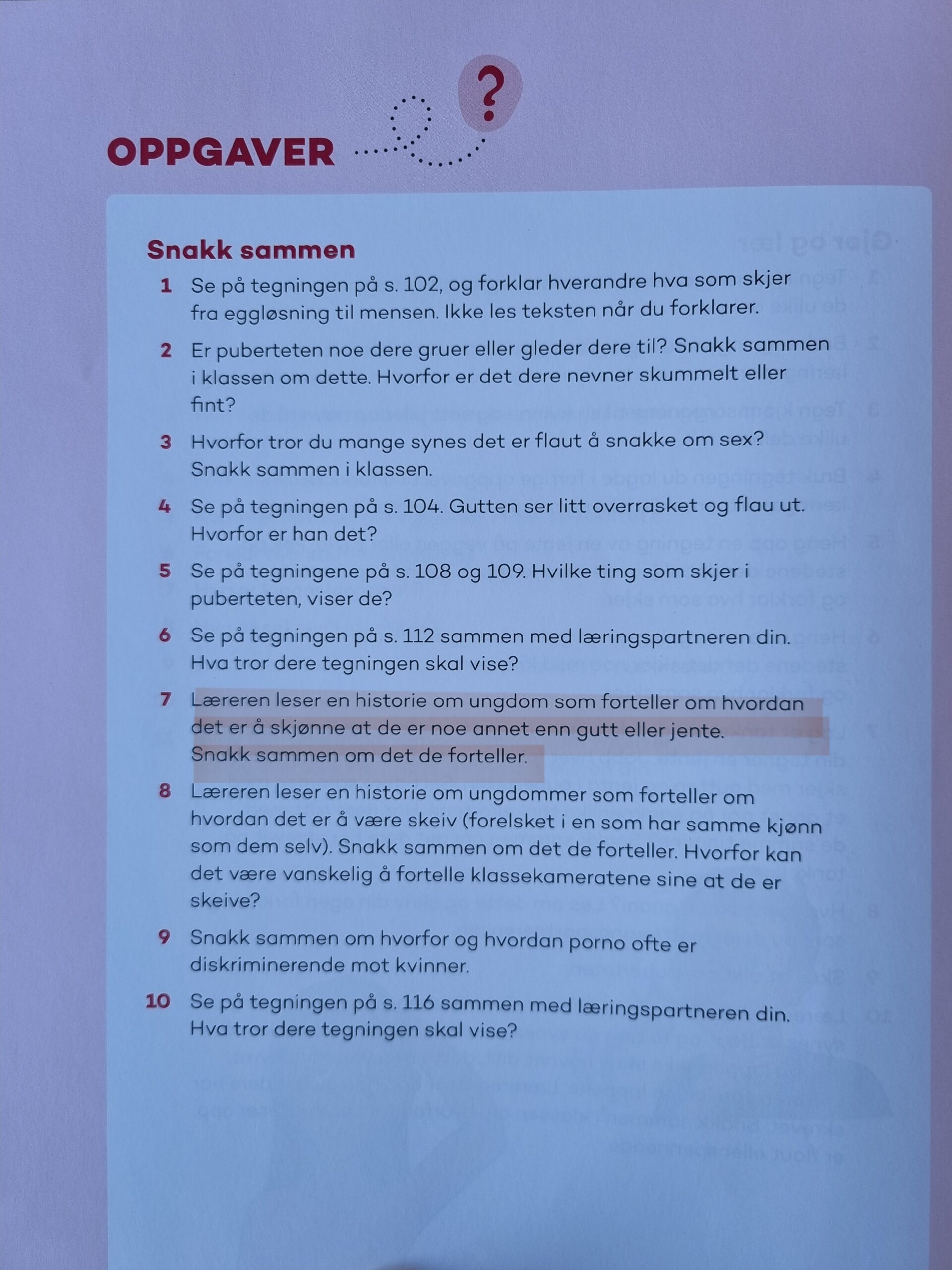
Tasks in the chapter are designed to introduce students to and explain so-called gender identity/the idea of self-perceived gender. It is also designed for the teacher to read a story about a young person who tells about what it is like to realize that they are something other than a boy and a girl (Note: It is possible to have an experience that one is something other than a boy and a girl, but here it is expressed that one can actually be something other than a boy and a girl). In this way, students are exposed to gender confusion, through hearing personal stories from young people who are not sure about their biological gender.


