Gyldendal – Reflection 7 – Chapter 4 #
Summary #
Gyldendal Reflex Science 7 (GRN7) is an active communicator of queer theory and sexological understanding of gender as gender identity. The textbook disregards
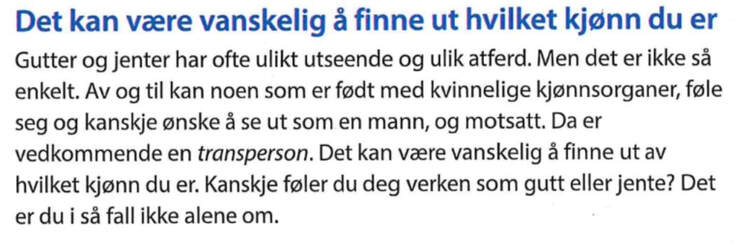
scientific facts about gender, with headlines like “it can be hard to figure out what gender you are”, “gender identity is about how you feel” and on page 106 it says that gender is determined by identity and: “When you hear the word gender, you might think of boy and girl, man or woman. But it’s actually not that simple. We have a diversity of genders.”
GRN7's presentation of gender is highly deserving of criticism, it is far from a pluralistic or scientific way of thinking, biological or approach to gender. In the digital
edition, there is a shocking error in the first sentence of the chapter on gender: “In the human species, we have a diversity of genders”
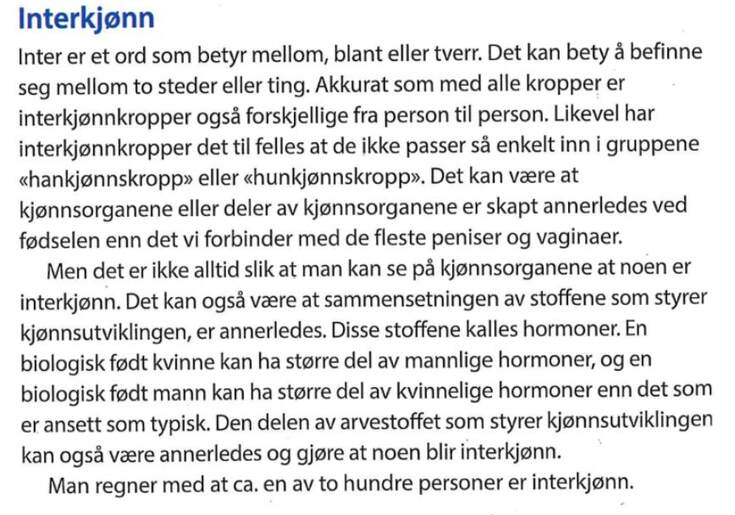
The entire content engages in a form of ideological grooming, a propagandistic build-up to queer theory, where the beginning of the chapter talks about animal species that can change sex or have two sexes. Then the so-called “third sex” is introduced by intersex, which is presented as an “intersex”, followed by a complicated thesis about hormones and genetic material, concluding with the fact that one in a hundred people is intersex.
So a third gender.
This book should challenge teachers and principals as to whether they support the view that is conveyed.
It is not scientific, not biological, and far from a pluralistic approach to “gender identity.” Roll the dice zero. This is gross heresy.
Chapter 4: Gender and Sexuality #
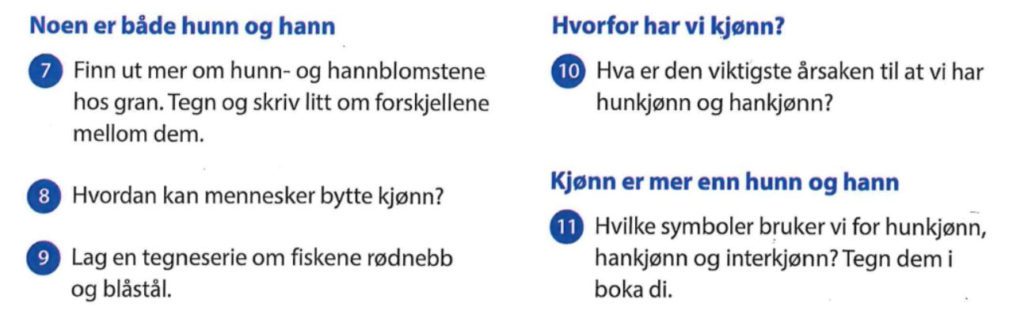
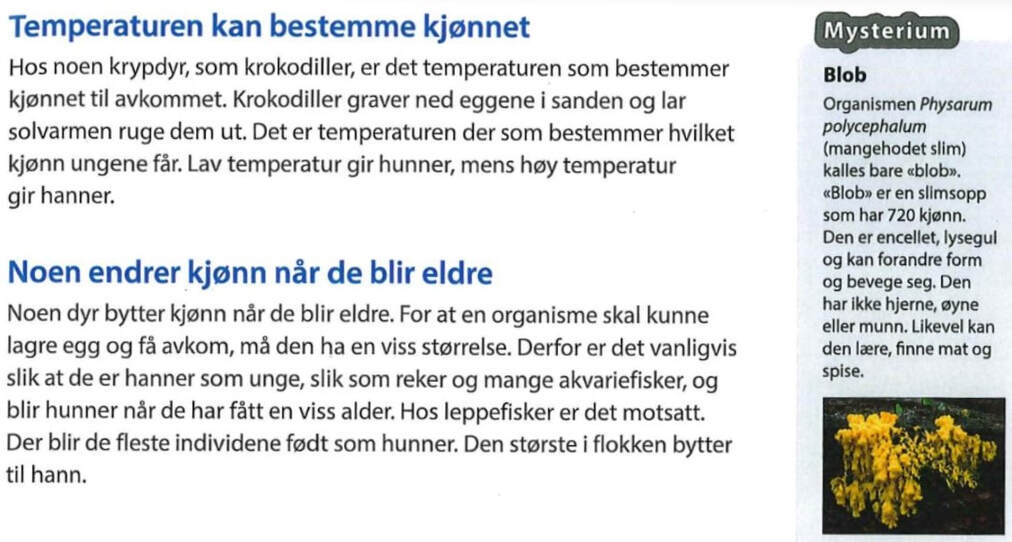
Why do we have gender? Some people are both female and male (p.98)
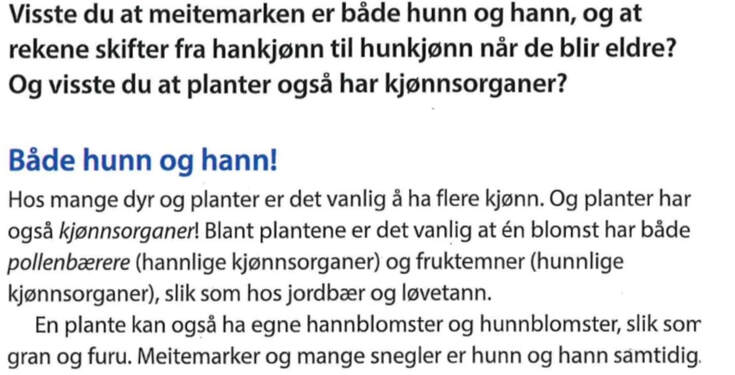
Excerpt from page 99: #
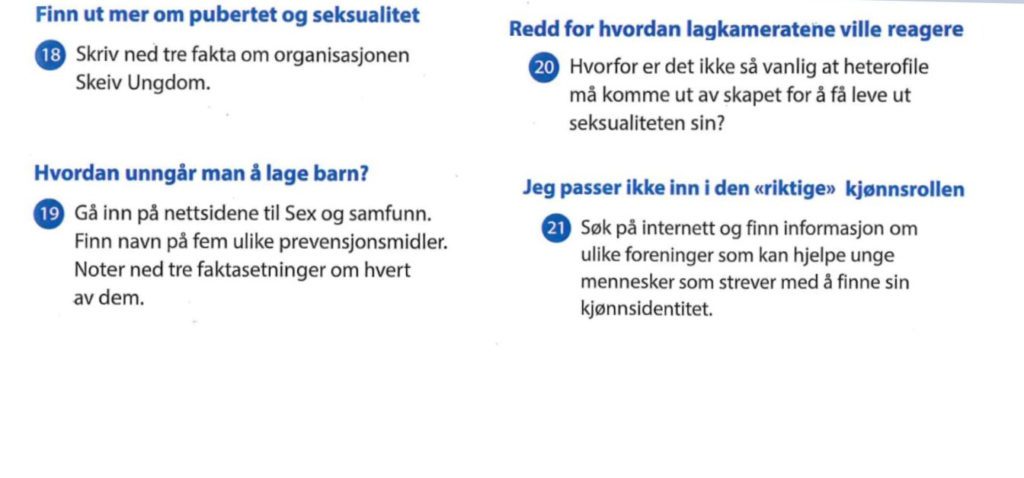
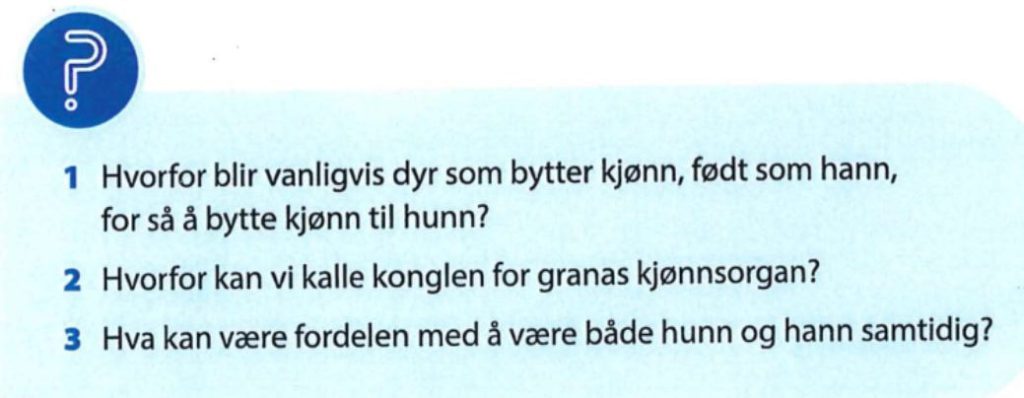
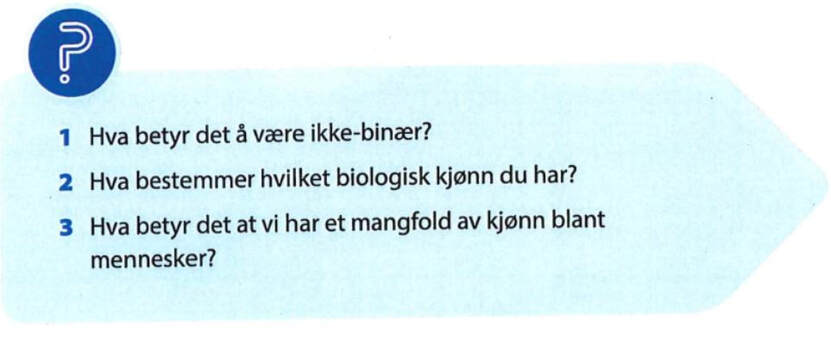
The questions for the chapter show the intention of the teaching. One should find the advantages and disadvantages of being a different/multiple gender early on and normalize the idea of how gender should be understood:
Gender is more than female and male (p.102) #
“So far we have described gender in a very simplified way, namely that we need two different genders to achieve sexual reproduction and variation as a result. But gender is much more complicated than just female and male.”
Gender is more than body (p.104) #
“Sex has evolved in nature because it is wise to create offspring with many different characteristics. But for us humans, gender means much more. It has a lot to do with our identity.”
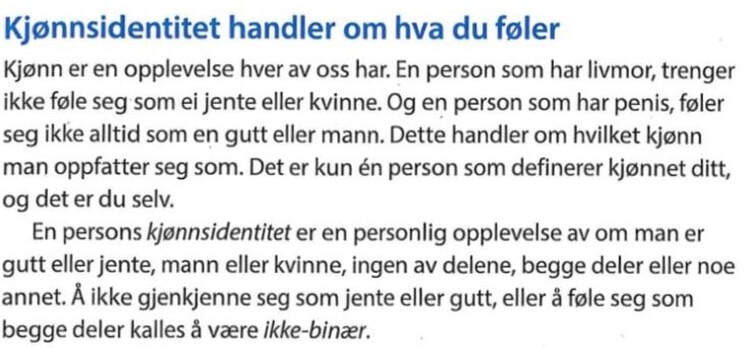
Excerpt from page 105 about gender identity: #
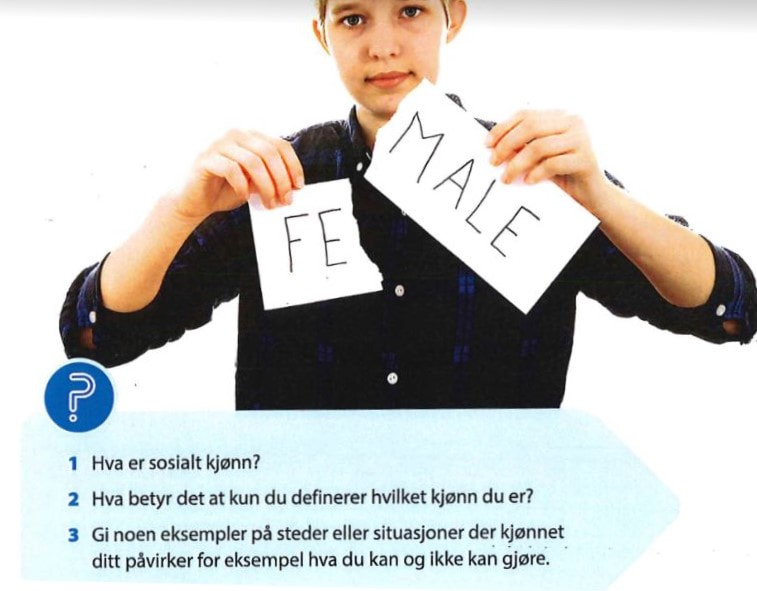
Assignments and use of images for the chapter: #
Gender is determined by identity and inheritance (p. 106) #
“When you hear the word gender, you might think of boy and girl, man or woman. But it's actually not that simple. We have a diversity of genders. But what does that really mean?”
A diversity of genders among humans: #
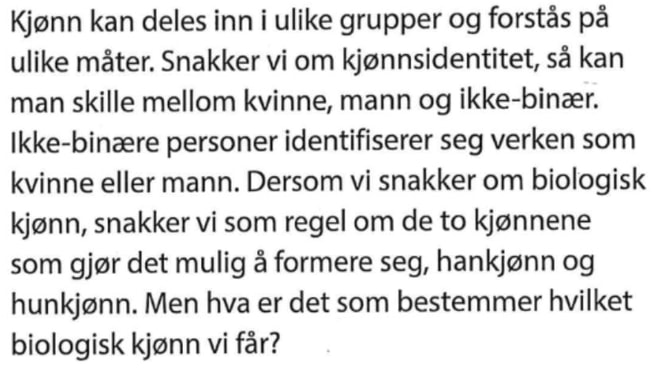
Figure taken from page 106: #
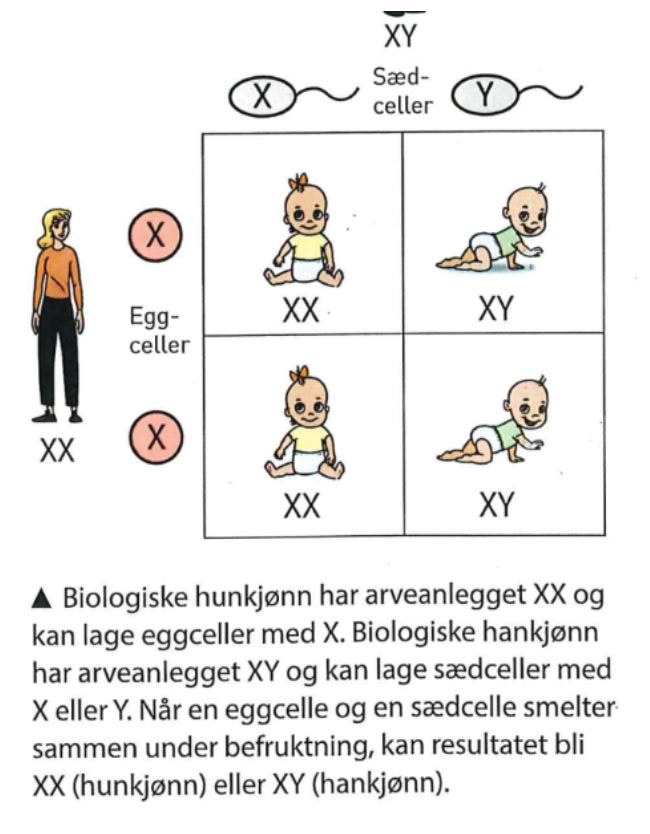
NB! One consistently uses biological female and male, not male and female, to create a result XX and XY. The people pictured are also described as XX and XY. (The picture of the man at the top was not included)
Questions for the chapter (p.107) #
Sex and falling in love (p.108) #
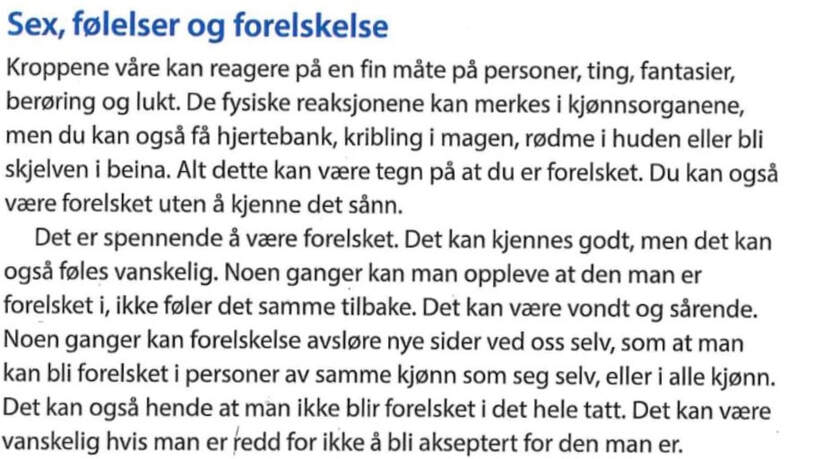
“We have now seen that there is a diversity of genders, and We have established that gender is about both body, identity and emotions. But gender is also about sex and sexuality. Puberty is a kind of preparation for this.”
Excerpt from page 109: #
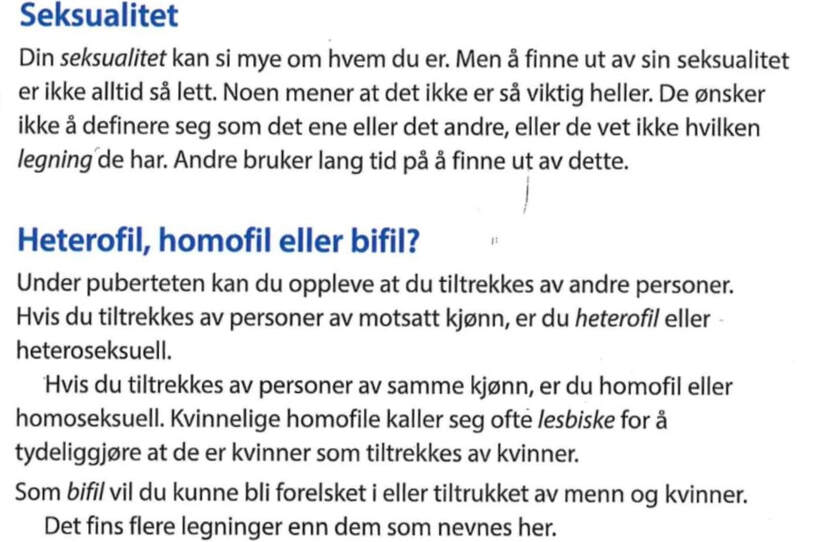
Sexuality (p.110) #
“Sexuality is about who we fall in love with, who we are sexually attracted to, and who we want to be romantically involved with. Sexual orientation means the same thing.”
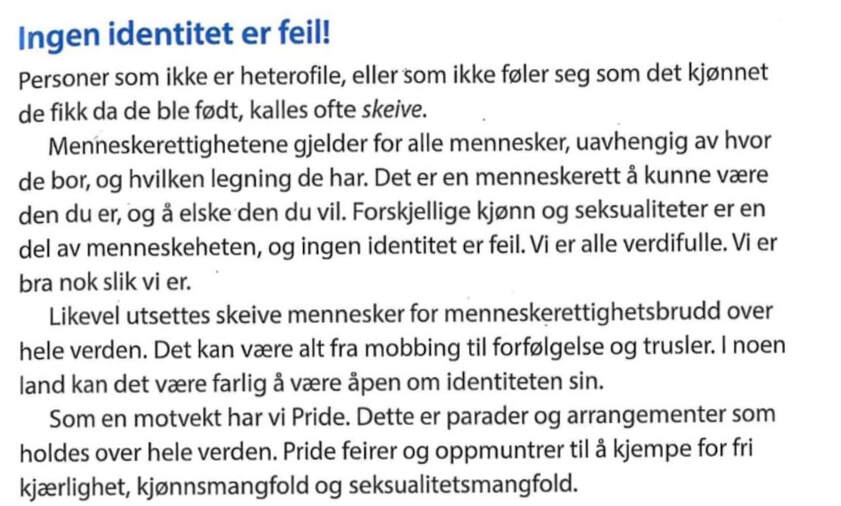
Excerpt from page 111 about Pride and queer rights #
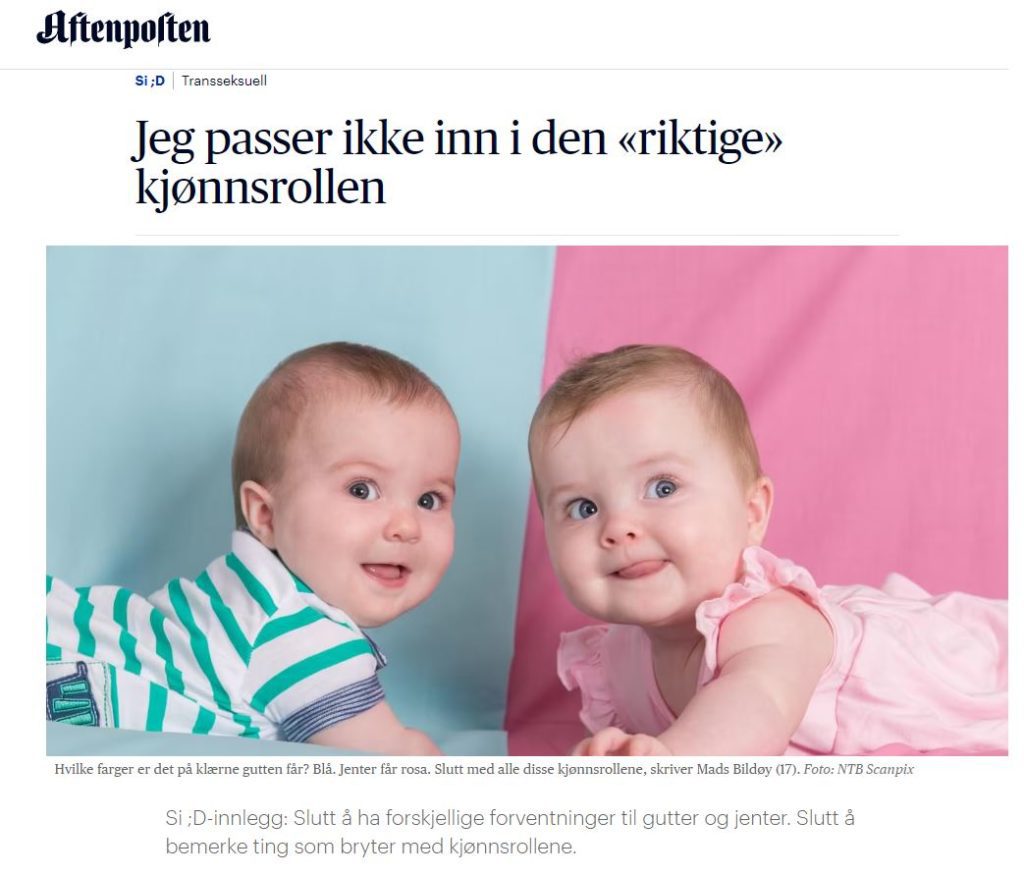
In the in-depth section of the chapter (pp. 116-118) a reader's post from Aftenposten in 2015 written by 17 year old Mads: “I don’t fit into the right gender role”
Textbook questions for the chapter (pp. 122-123) #