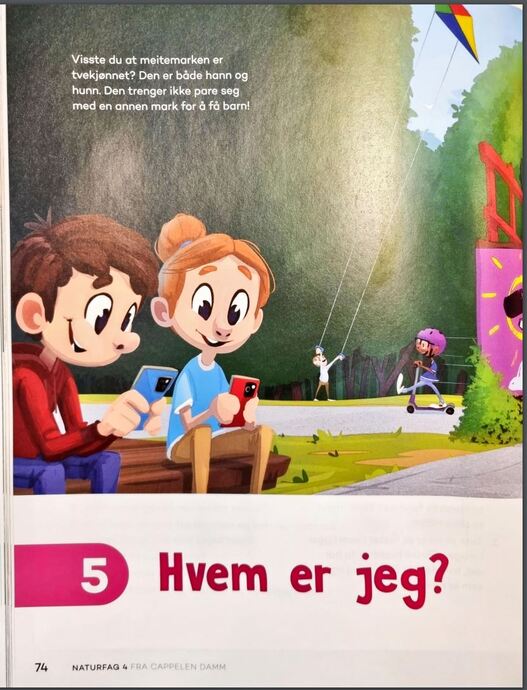
Chapter 5 «Who am I?» #
Summary #
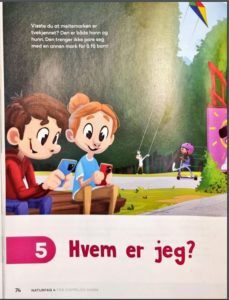
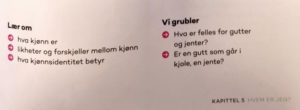
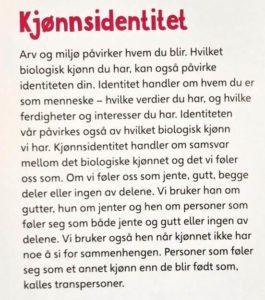
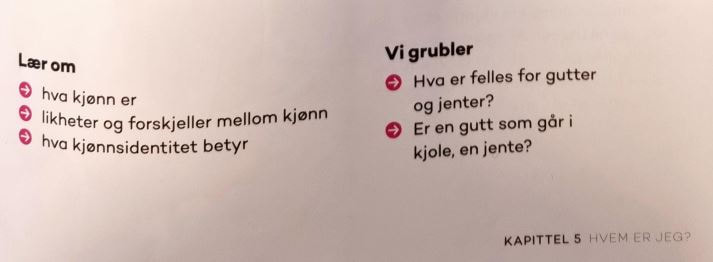
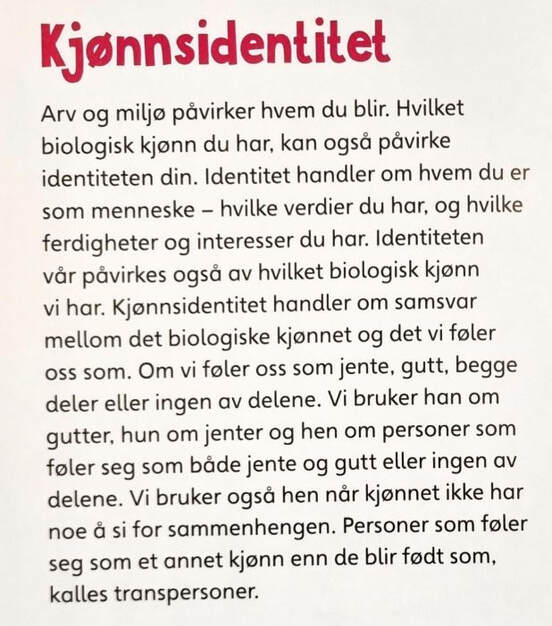
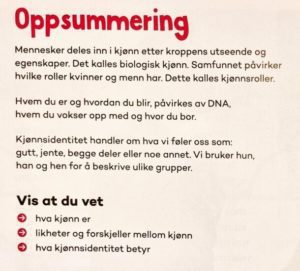
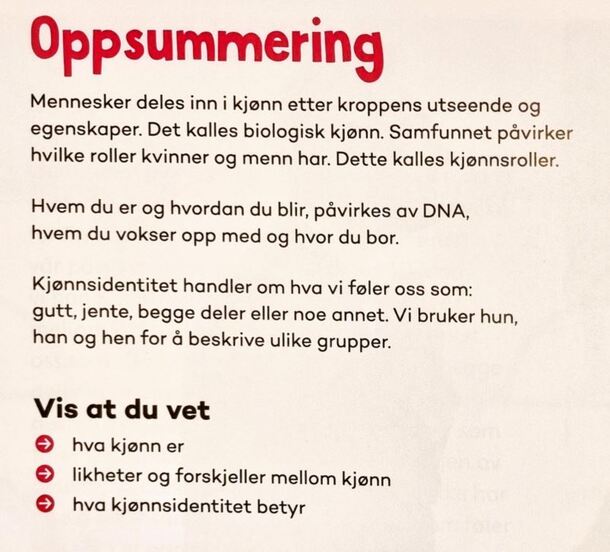
Students are introduced to “gender identity” and learn that they can feel like “boy, girl, both or neither”, as well as the introduction of the pronoun “hen” for those who identify as “non-binary”, i.e. neither male nor female. Transgender people are introduced as children who identify as a gender other than their biological gender.
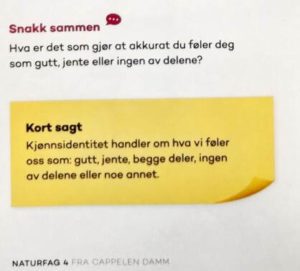
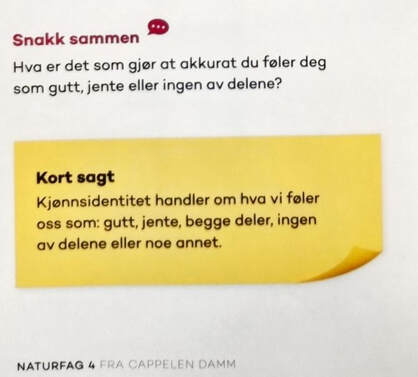
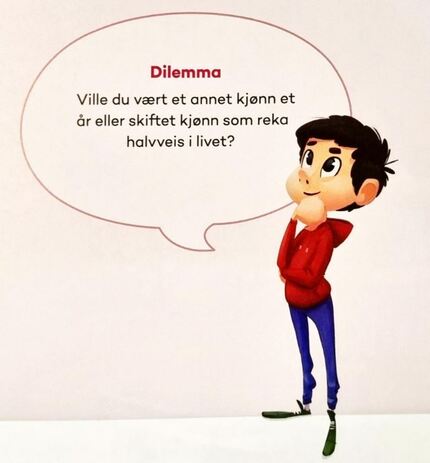
The book asks students “what makes you feel like a boy, a girl, or neither,” and then the book reinforces that students are what they feel like. In addition, students should think about whether they would change gender for a year, or like a reka changing gender halfway through life. Metemark is introduced into the mix of confusion that it is hermaphrodite.
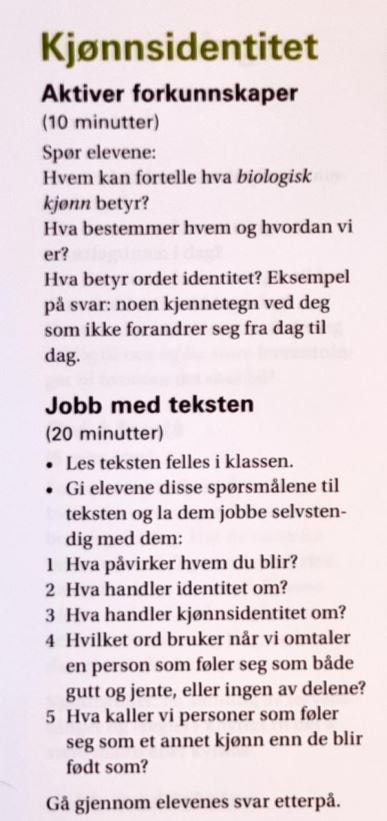
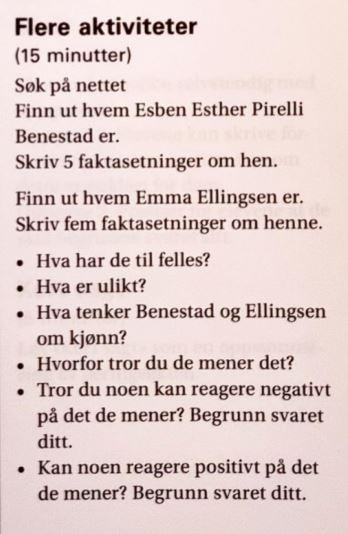
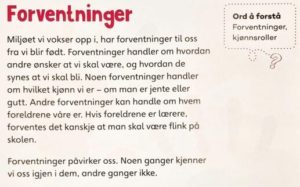
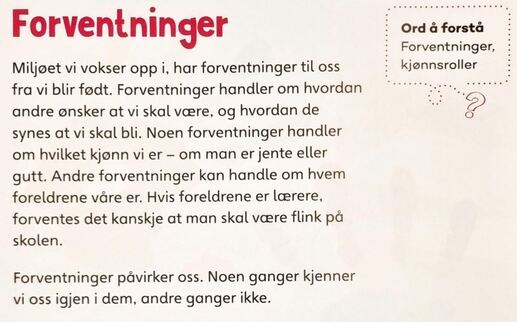
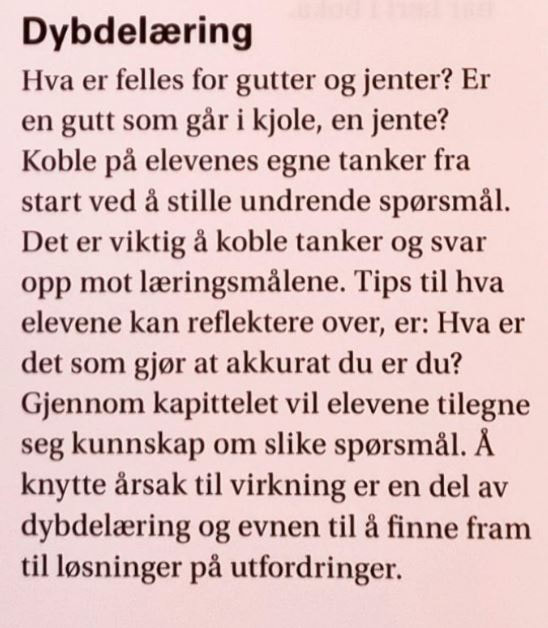
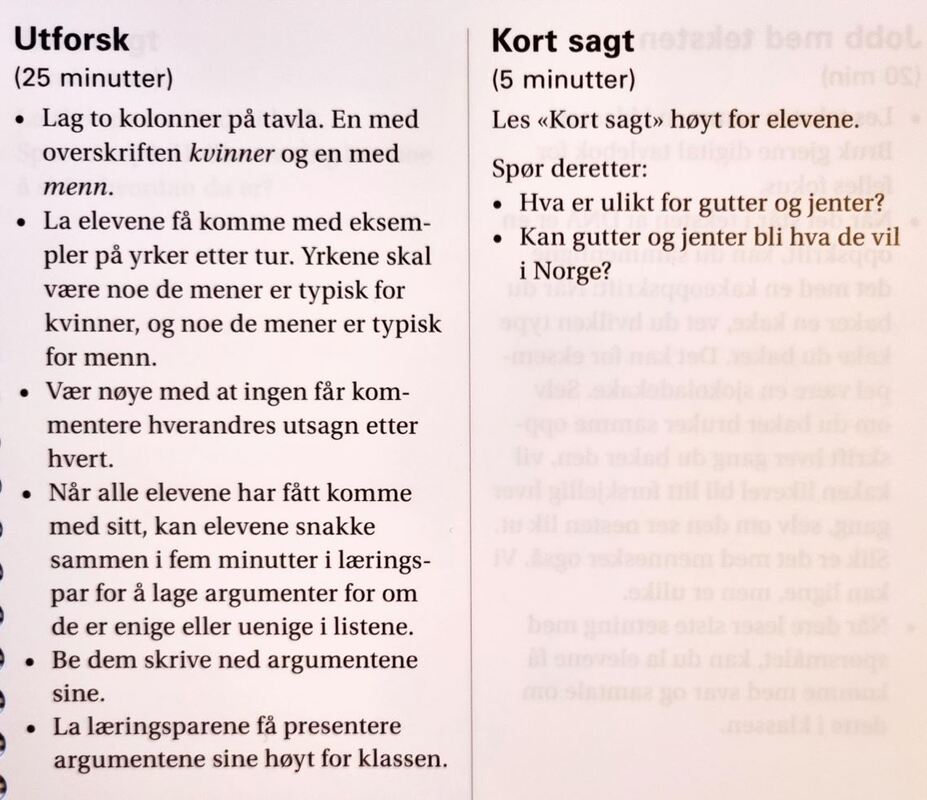
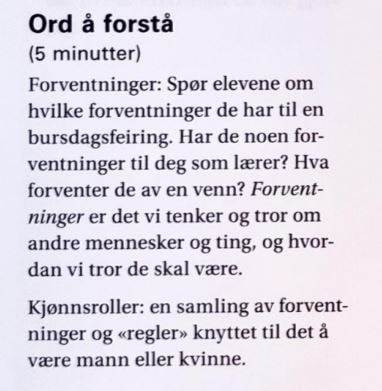
The book picks up again on the “norm critique” that was introduced in Mylder 3, and talks about “gender expectations” and “gender roles,” which students must learn to break away from and not relate to. The teacher’s guide is intended to “activate prior knowledge” about gender identity through a series of probing and charged questions, where the definitive answer is queer theory, gender is what the student feels.
Excerpt from the book pages 75 – 86 #
Click on the images for full size.

What is gender and expectations of gender page 76 #
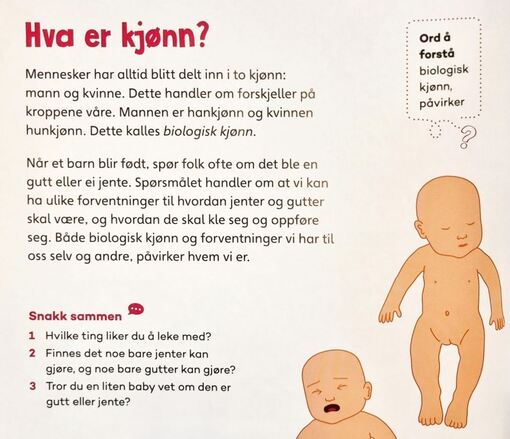
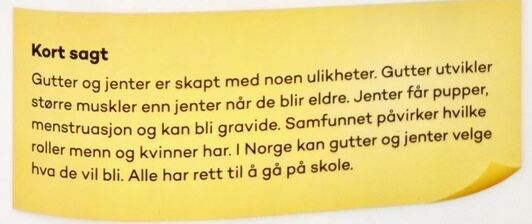
Girls, boys and the influence of society? #
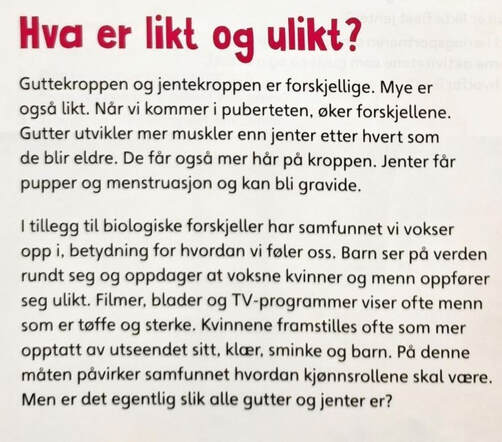
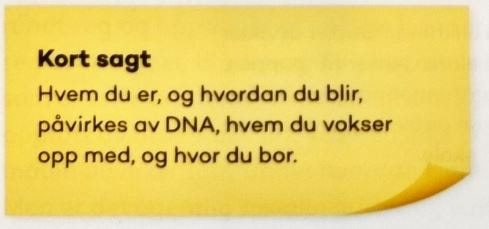
Cappelen-Damm's summary #
Click on the images for full size.
What does the teacher's guide say? #
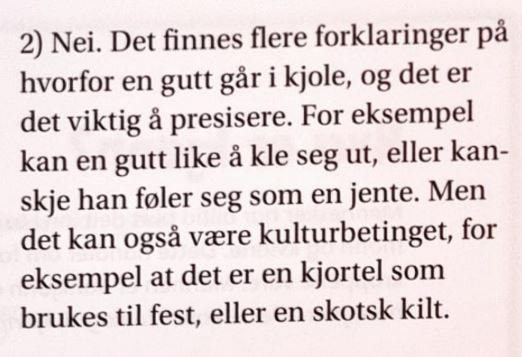
Answer to introductory question 2) "Is a boy who wears a dress a girl?"«
Exercises to explore whether there is a difference between girls and boys. #
Activities and external resources related to the chapter #