Chapter 8: We are growing #
Summary #
In Refleks 3 Science from Gyldendal, the book builds the content towards a climax where students learn that they can be any gender they want because gender is an experience. Students learn that they can be more than just boy and girl, because they can be both.
The build-up to this statement is filled with a body of thought called “critical theory” and norm criticism that stems from queer theory. The line of thought takes the student through that there are expectations of gender that are not good, by stereotypes that must be broken.
The starting point for such thinking is that boys and girls are exactly the same, like the same things and can do everything the same, because boys and girls are born as blank slates, “tabula rasa”. This type of thinking is found in sexological philosophy and is used by, among others, the Oslo Health Centre for Gender and Sexuality. In their presentations to explain gender and gender identity from queer theory, the starting point is tabula rasa, everyone can become whatever they want, of any gender.
Key competence goals: #
- Conversation about similarities and differences between the sexes, about gender identity and about human reproduction
Interdisciplinary theme:
- Public health and life skills
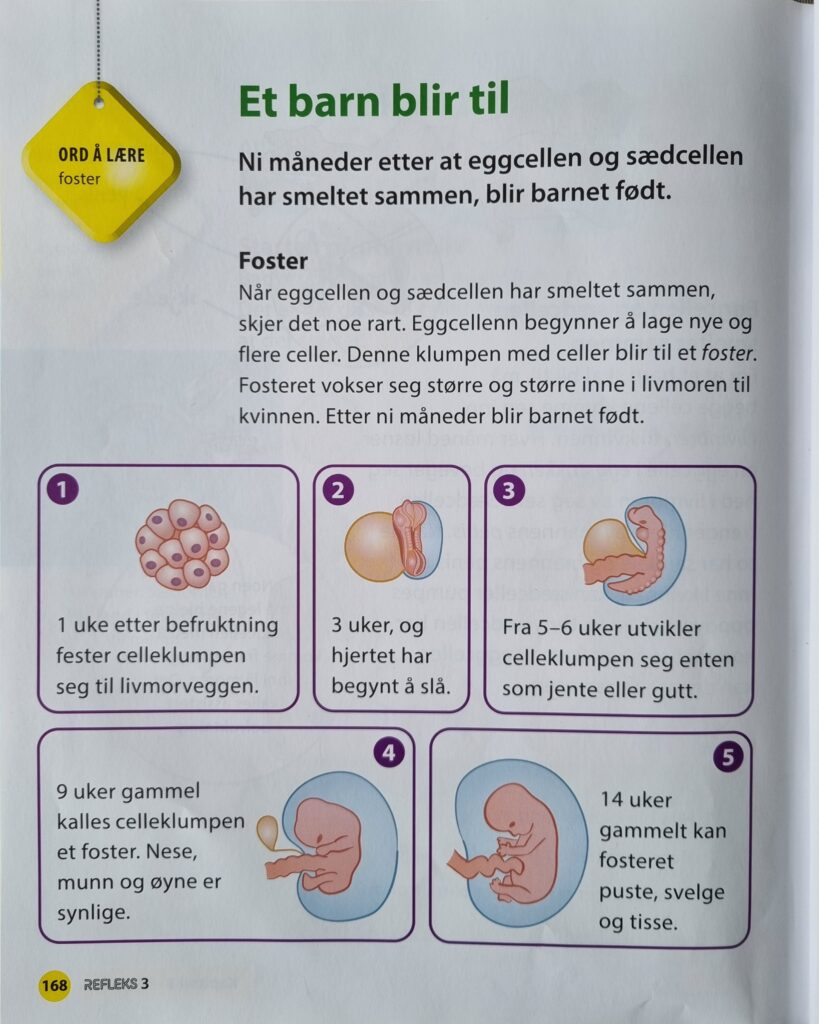
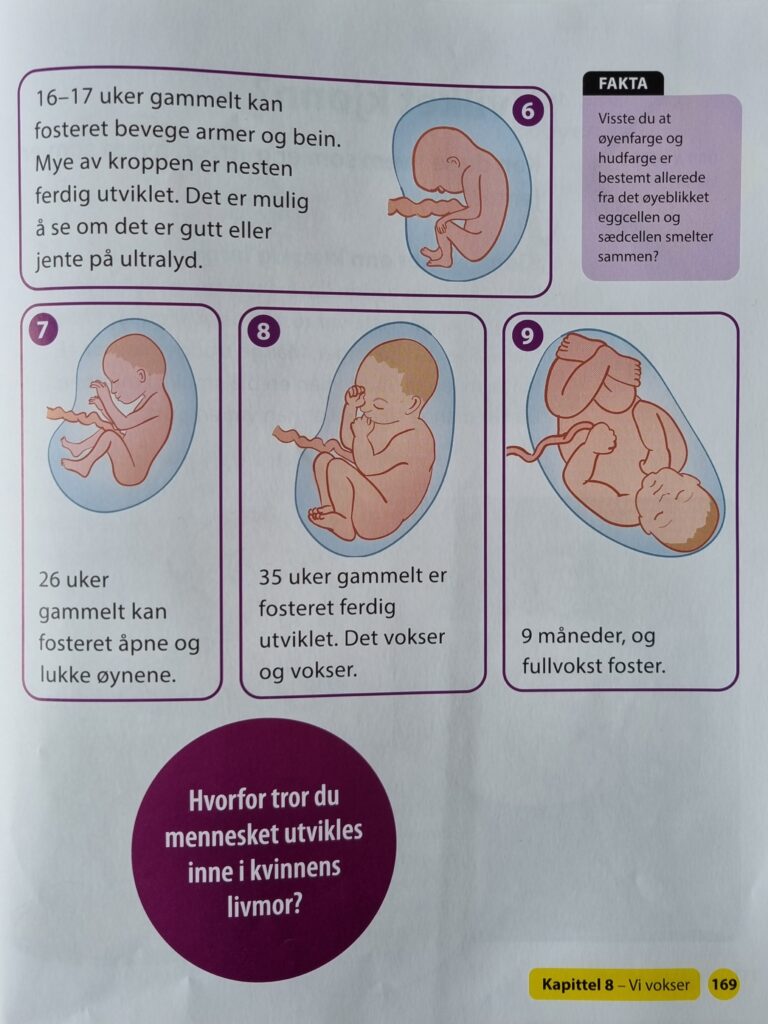
The textbook has a spread (pp. 168-169) that shows the development of the fetus. Gyldendal has included that the fetus develops into a boy or a girl. In other textbooks, one can see that this is omitted.
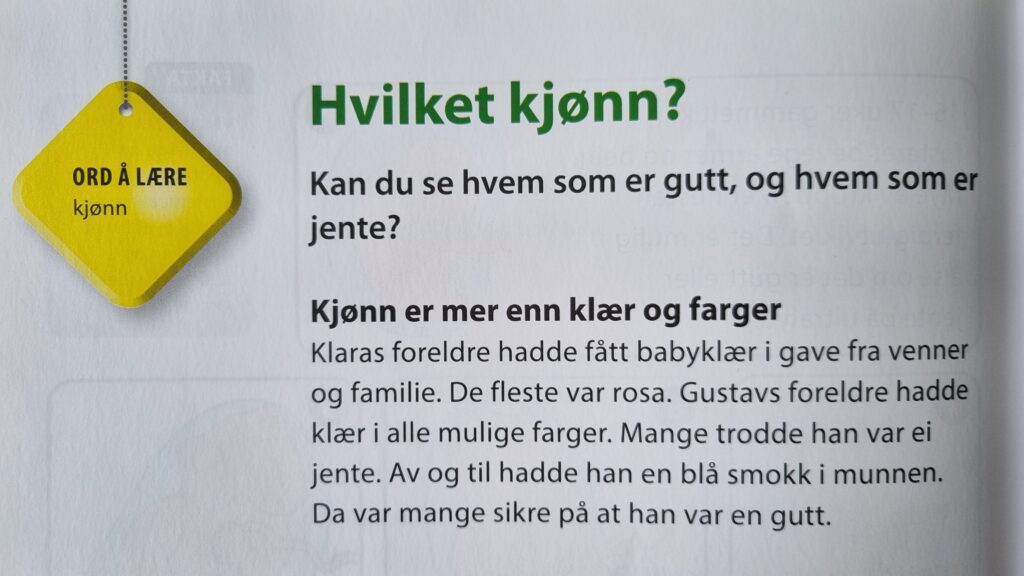
What gender? #
The textbook problematizes gender roles and focuses on different expectations for boys and girls – so-called norm criticism.

Assignments from the textbook #

Assignments on gender, p.171
Experience #
Experience is a focus word in the chapter. This is linked to gender identity which refers to the experience of being a boy, a girl, both, or neither.
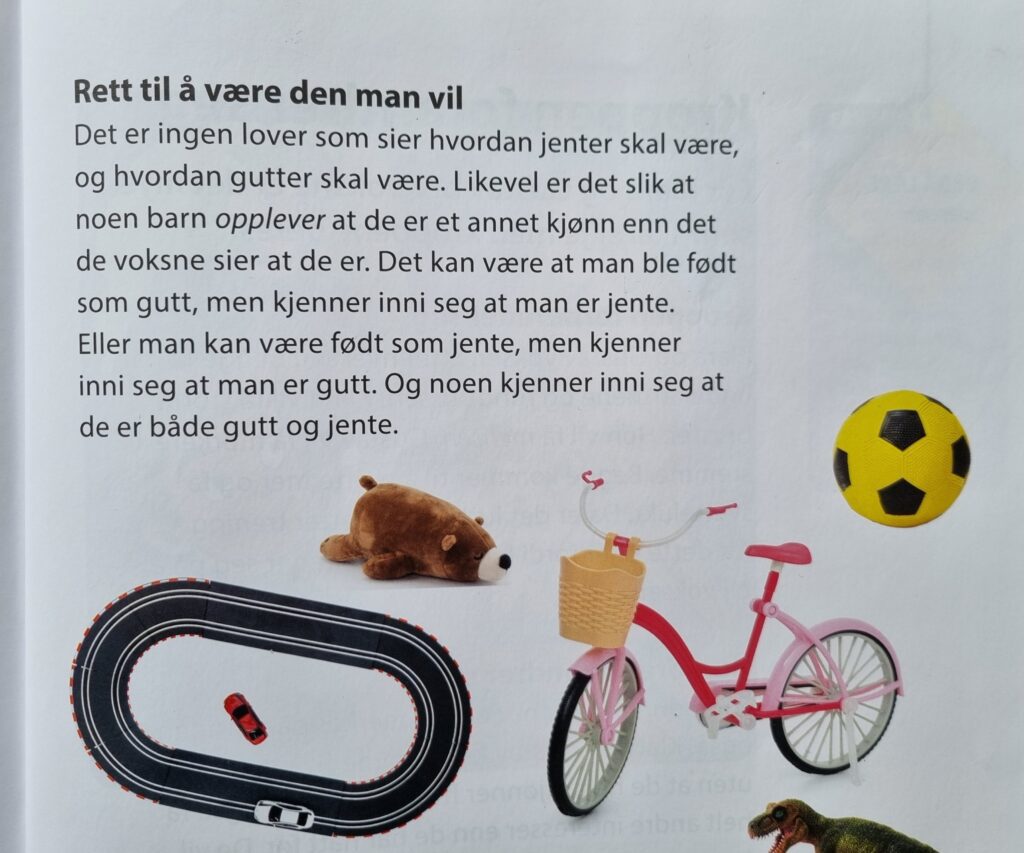
The right to be who you are a recurring theme in textbooks on gender and identity. This «mantra» refers to the fact that you are the one who defines who you are, including your gender. You can choose to be whatever you want, and there are many options presented. In the excerpt below (from p. 175) we see that the idea of being born in the wrong body is introduced as early as grade 3.