
FACTS ABOUT GENDER!
What is gender?
Sex is a biological mechanism for reproduction. Sex is binary, meaning there are only two sexes, because all humans are the result of fertilization between gametes from two different parents, one of which produces large gametes while the other produces small gametes. The parent that produces large gametes is a female and the parent that produces small gametes is a male, i.e. father and mother respectively. For the species homo sapiens, or humans, these are always women and men.
This is how it works for all animals and plants that reproduce sexually. Individuals are divided into female and male depending on whether they are predisposed to produce large or small gametes – this is what we refer to as egg cells and sperm cells in humans.
There are some species where the same individual can produce both large and small gametes (snails), and some species where an individual can change sex during its life (clownfish). This naturally does not change the fact that sex is binary. In the first case, the gendered binarity occurs in the same individual, while in the second, the sex changes from female to male in the binary sex system. No human has ever changed sex or reproduced with themselves. For humans, it is only possible to be either female or male, and it is not possible to change this.
In asexual reproduction, offspring are formed by an individual copying its own genetic material.
NRK documents that the population is gender -confused, from children to adults
When you hear the word gender, you might think of boy and girl, man or woman, but it's actually not that simple. We have a diversity of genders.
Gyldendal publishing house, Reflex 4, Science
What is not gender?
To fully understand what sex is, we must also understand what sex is not. Many people believe that sex chromosomes are the same as sex, or that medical diagnoses are their own gender. This is not the case. But what about those who do not produce gametes – are they still female or male? Yes, they are. And the fact that only women are can have children does not mean they must.
The sex chromosomes are the mechanism, or tool, that is used for the individual to become female or male. But this is not the case for all species, such as the crocodile. There, it is the temperature of the eggs that determines whether the offspring will be female or male. The crocodile does not have sex chromosomes, but this of course does not mean that a crocodile does not have a sex! There are therefore different mechanisms that ensure that an individual, belonging to a species that reproduces sexually, becomes female or male. Regardless of the specific mechanism, everyone ends up as female or male, as long as they belong to a species that reproduces sexually. In humans, the mechanism that determines whether we will become female or male is a gene we call the SRY gene. This is usually, or almost always, located on the Y chromosome. That is why we say that XX are females while XY are males. For humans, it is determined at fertilization whether you will become female or male. There are no doctors who assign sex at birth, they simply observe what it is.
But what about people who have what we know as Klinefelter syndrome, which has an XXY chromosome composition? This diagnosis is a DSD diagnosis (disorder of sex development) and describes a disorder of sexual development. Only men can get this diagnosis.
Previously, these were called intersex conditions, but because this incorrectly gives the impression that those with these diagnoses do not have a sex, we now use the more correct term DSD. These diagnoses are even gender-specific. In the same way that only men can get prostate cancer, and only women can get cervical cancer, women and men never get the same DSD diagnoses. Everyone who has a DSD (intersex condition) is either female or male.
When we use the term gender, we always refer to biological sex. We do this because all discussion about gender has its starting point in this biological mechanism. If we had reproduced asexually (having offspring by copying our own genetic material), then of course we would not have talked about legal sex or gender roles. It is because all people are either women or men (girls and boys before puberty) that it makes sense to talk about legal sex or gender roles. And the only way to distinguish these two sexes from each other is based on the reproductive systems. Although it is more common for men to be taller than women, this is not a gender-determining factor, and even if a man has long hair, this does not mean that he is a woman, even though it is more common for women to have long hair.
Legal gender is therefore not gender and only makes sense as long as it refers to biological gender. Nothing happens to the individual even if you were to change the legal gender – the individual remains as it is genetically. Grammatical gender is not gender either. That we write a child Of course, this does not mean that the child is not a girl or a boy. Even though the word dog is masculine and we write a dog, it does not mean that said dog is necessarily a male. A stone For example, is not a gender even though the article we put in front of "stone" is the article for masculine nouns. Stones do not reproduce and therefore has no gender.
Even though we humans are able to put words to things, that doesn't mean we can change reality. Dinosaurs were binary even though no one was there to describe it. So when we say today that gender is binary, it's not an opinion or a perception – just as it's not a perception that the Earth is a sphere and not a cube. Saying that gender is a spectrum, or that we have many genders, is simply not true. Gender is binary and has been for over a billion years.
Professor of evolutionary biology, Glenn Peter Sætre explains to NRK what gender is not.
Intergender. Inter means between. Intergender bodies have in common that they do not fit so easily into the groups male body or female body.
Gyldendal, Refleks 4, Science - Chapter 4: Gender and Sexuality
What is gender identity?
This is not so easy to answer because there is no real definition. The origin of the word comes from John Money who performed operations on children with unclear gender characteristics, where his most famous experiment ended with the patient taking his own life. But what most people seem to mean by gender identity is that this is a feeling or what kind of gender a person experiences themselves as.
If the term gender identity is to make sense, it must be used in connection with gender. This means that you can either identify with the gender you are. Or you identify with the gender you are not – then you have gender incongruence or gender dysphoria. You cannot identify with a third gender, or a fourth or a fifth, because this does not exist, then this is an identity that is associated with something other than gender and cannot therefore be considered a gender identity.
But it is possible that you do not identify with either your own or the opposite sex, that is, that you have an absence of a gender identity. Because most people probably perceive gender as something you are and not as an identity, it can be assumed that most people end up in this very category. But for gender identity, there are only three options: 1. you identify with your gender, 2. you identify with the opposite sex, 3. You have no gender identity.
Regardless of how you view this, gender identity is not a scientific concept and it has no support in developmental psychology. The term as it is used today seems more to be the result of activism. Not even in the legislation is the term defined despite its use. In conclusion, it can be clarified that a gender identity does not change or affect an individual's gender, simply because gender is not an identity, experience or feeling, it is a biological mechanism for reproduction.
Gender identity is about how you feel. Gender is an experience each of us has. A person's gender identity is a personal experience of whether they are a boy or a girl, a man or a woman, neither, both, or something else.
Gyldendal, Refleks 4, Science - Chapter 4: Gender and Sexuality
Your gender identity is your own idea of who you are and how you see yourself. You may think of yourself as a boy or a girl, or not know quite what. You may want to be called he, she, or hen, or whatever you want.
Aschehough Publishers, Solaris 3-4, Science, Chapter: Humans
Recommended video on understanding gender for 8 - 9 year olds:
The teacher's guide for Aschehough Solaris 3-4 states that the film is recommended to be watched both before and after work on gender identity.“In this way, the teacher gains insight into the students' thoughts and attitudes BEFORE working on the topic, and the teacher can, in conversation with the students, see if there is a change in the students' thoughts and attitudes after the topic has been reviewed.”
What is norm criticism? (identity politics)
Norm criticism is linked to queer theory and is something that can be traced in textbooks in several places. The Djupedals committee in NOU 2015:2 was tasked with proposing measures for a safe psychosocial school environment. One of the measures was that norm-critical perspectives should be incorporated at all levels of the educational process.
Norm criticism is the view that the heteronorm is what defines gender roles, gender, sexuality, masculinity, femininity, and so on. The starting point is that patriarchy has defined a society that benefits men. Therefore, critical theory within norm criticism is the idea that norms must be broken in order for women to have equal rights and opportunities.
But from this theory, norm criticism (from feminists) has gone from criticizing the male perspective to queer activists and queer thinkers criticizing the entire “heteronormative”, men and women. That is, that society is made by and for heterosexual, biological men and women who have children. Norm criticism wants to combat this as the prevailing “norm”, and norm criticism wants equality to apply to all forms of cohabitation, gender, gender identities, sexual orientation and fetishes. Everything should be normalized and equalized, that is the new norm that arises from norm criticism, queer theory and intersectionality. That everything is normal. New variations only mean more diversity and are welcomed into the normal.
To explain norm criticism in activists' own words, we can use FRI's brochure "A school for all - sexual orientation, gender identity and inclusive education". The text below is taken directly from the association FRI's brochure, page 20:
Tolerance or norm criticism?
When talking about discrimination against minority groups, it can be easy to focus on tolerance towards those who deviate from the norm, rather than focusing on the norm being the problem. Put bluntly, this can be summed up as: «We (read heterosexuals) have to be nice to homosexuals.» But not everyone in the classroom is heterosexual men and women. So it is important to include the full diversity of the class when talking about LGBT.
Tolerance often means that power is given to the group that is supposed to tolerate. LGBT becomes something we (read heterosexuals) have to tolerate. By reversing the perspective and focusing on the norms and structures that make some people considered "deviants", you will be able to highlight the reasons why some people are discriminated against. This way you can involve students in the work of preventing discrimination.
This is called norm criticism.
An example of norm criticism could be discussing society's expectations of how we should behave as girls and boys.
When discussing structures and not individuals, it is emphasized that it is the norms that are problematic, not those who break the norms. If you still want to highlight a group, it can be a good tip to use the phrase «those of us who…». This prevents individual students from feeling invisible, and helps to break down the divide between us and them.
Restart – norm-critical teaching Restart is Skeiv Ungdom's school initiative.
Skeiv Ungdom visits grades 7-10, as well as high schools. Together with the students, they explore, discuss and challenge norms related to gender and sexuality.
Queer Youth is described in the Store Norske Lexikon as follows:
Skeiv Ungdom works for the freedom of each individual to be themselves, regardless of sexual orientation, gender identity and gender expression, and bases their anti-discrimination work on norm criticism. This means focusing the spotlight on oppressive norms rather than working for what they call superficial tolerance and acceptance, as the gay movement has traditionally done since the 1980s. This work has a clear foundation in queer theory and the concept of heteronormativity.
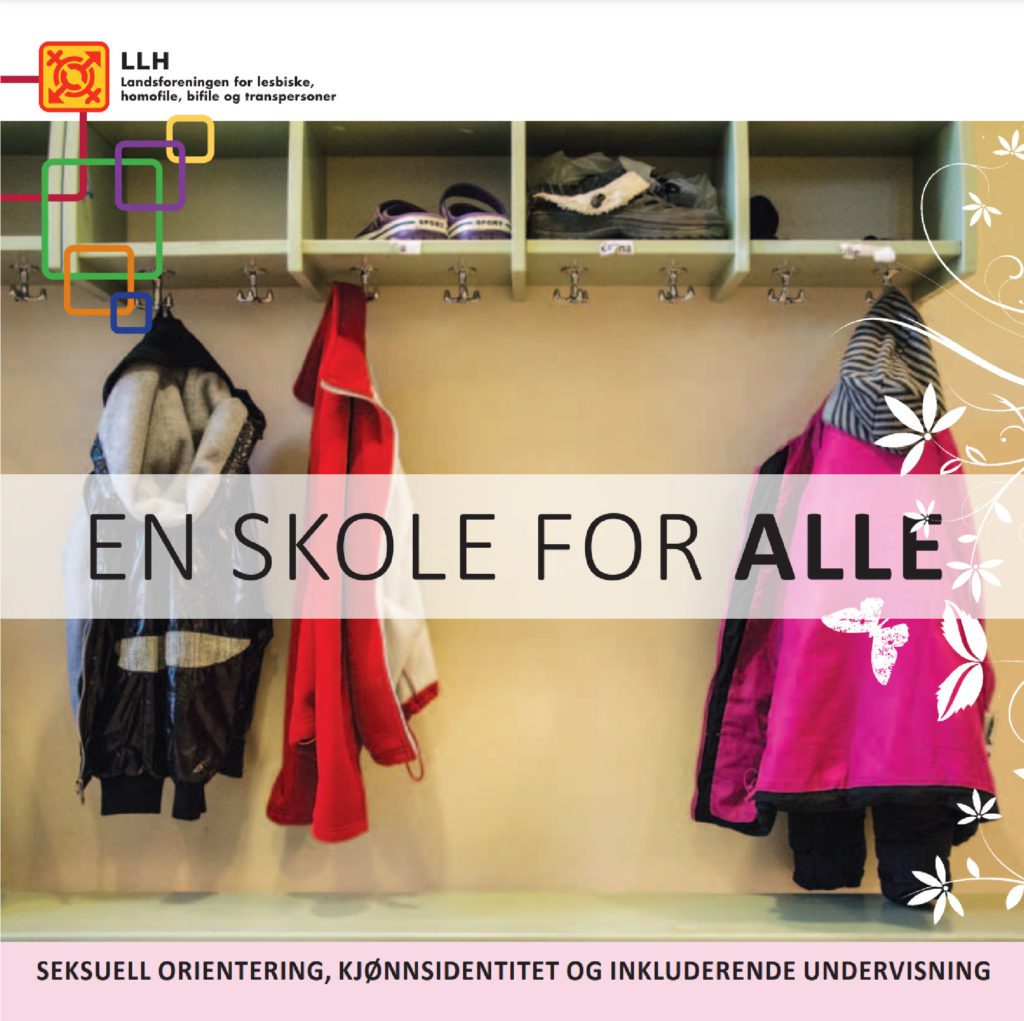
Criticism of norms from NOU 2015: from the government:
A norm-critical perspective in preventive work. In order to understand the cause of the offense, whether it is conscious or not from the person who said or did something, a norm-critical perspective is appropriate. When norms may be the cause of the offenses, it is important to analyze and spotlight the norms that exist in one's own school, both among students and staff.
- A norm-critical perspective must be incorporated into teacher education, principal education and in continuing and advanced training of teachers.
- Norm criticism should be incorporated into relevant subject curricula, and teaching programs on norm criticism should be developed for students.
- Professional communities must be built up with expert expertise in offenses, bullying, harassment and discrimination related to the grounds for discrimination in schools.
- The Ministry should review the scheme for providing support to organizations that offer capacity building to schools on harassment, so that the support becomes more predictable.
- The norm-critical perspective must be integrated into all teacher education programs.
Summary of norm criticism and identity politics
Norm criticism is connected to queer theory and to “intersectionality”. To understand the complexity of identity politics, we have made a film that visualizes what happens if we follow norm criticism and intersectionality to the extreme. We get a new type of hierarchical class society where every individual is potentially a minority who needs the protection of the state, and where a safe language is developed that does not offend anyone.
What organizations promote queer theory?
Below is a list of organizations that promote or disseminate queer theory, or that use queer theory as the basis for their views on gender and sexuality - including gender identity, gender diversity, etc.
Documentation on FRI's lobbying can be found here >>
NB! The list may include all municipalities that have adopted action plans for LGBT / gender and sexual diversity. Please let us know with a link or image to add more organizations and municipalities.
The FRI Association / Pink Competence School
University of Agder
Directorate of Education
Directorate of Children, Youth and Family Affairs
Directorate of Health
Humane-Ethical Association
Gender and Sexuality Health Center
Sex and Politics
Sex and society
Bergen Municipality
Chemfriendly Norway
the gender incongruence expertise network
The Gender Incongruent Patient Organization
The Association for Sexual Education
Health Committee
HivNorway
Inland University College
Department of Educational Sexology and Therapy
Correctional services
Kristiansand Municipality
KS Agder
The Equality Center
Medical sex education Oslo
People in Focus
MSO Bergen
MSO Trondheim
Enough Bergen
Nord Student Association
Norwegian Women's Sanitary Association
NSF
Oslo Municipality
OsloMet
PEONY
PolyNorway
Pro Center
Quintet AS
Marriage assistance
Sexual self-confidence
Center for Quality in Medical Services, Norwegian Association of General Practitioners
SiS - Student Association in Stavanger
Queer Youth
Queer World
Queer Christian Network
The Foundation Health Committee
The Stensveen Foundation - confident in your own expression
Studentinord
Sunnaas Foundation
Sustainable Passions
Tromsø Municipality
UiT The Arctic University of Norway
Violation of the Education Act
Get a clear overview of what is in the 2020 curriculum, what the competence objectives are in the subjects and grade levels, and what the Education Act requires in terms of scientificity and accountability in relation to the textbooks' content about gender, gender identity and queer theory. It appears that the publishers are probably violating the Education Act.
What do the experts say...
- about biological sex?
- about gender identity and gender roles?
- about the treatment of children and adolescents?
Gender is binary (Glenn-Peter Sætre):
https://www.vg.no/nyheter/meninger/i/jlmVxn/kjoenn-er-binaert
Gender and Identity – Biology and Ideology (Glenn-Peter Sætre):
https://www.minerva.no/biologi-fra-papirutgaven-identitet/kjonn-og-identitet-biologi-og-ideologi/396356
Sex Is Not a Spectrum (Colin Wright):
https://www.realityslaststand.com/p/sex-is-not-a-spectrum
Deconstruction of man and woman (Kristian Gundersen):
https://www.aftenposten.no/meninger/kronikk/i/qALLrm/dekonstruksjonen-av-mann-og-kvinne
Interdisciplinary concerns about the use of "gender identity" (Bruset et al.):
https://agendamagasin.no/debatt/tverrfaglege-bekymringar-om-bruk-av-kjonnsidentitet/
Narrow gender roles create confusion (Brattgjerd et al.):
https://forskersonen.no/kjonn-og-samfunn-kronikk-meninger/trange-kjonnsroller-skaper-forvirring/1629298
The Norwegian Directorate of Health issues irresponsible guidelines for gender incongruence (Suren et al.):
https://www.aftenposten.no/meninger/kronikk/i/MRzMWB/helsedirektoratet-kommer-med-uforsvarlige-retningslinjer-for-kjoennsinkongruens-fem-leger
Time to Hit Pause on 'Pausing' Puberty in Gender-Dysphoric Youth (William Malone):
https://www.aftenposten.no/meninger/kronikk/i/MRzMWB/helsedirektoratet-kommer-med-uforsvarlige-retningslinjer-for-kjoennsinkongruens-fem-leger
https://www.tv2.no/nyheter/innenriks/plutselig-okte-en-pasientgruppe-pafallende/15159773
What do experts say about biological sex?
Gender is binary (Glenn-Peter Sætre):
https://www.vg.no/nyheter/
Gender and Identity – Biology and Ideology (Glenn-Peter Sætre):
Sex Is Not a Spectrum (Colin Wright):
https://www.realityslaststand.
Deconstruction of man and woman (Kristian Gundersen):
https://www.aftenposten.no/
What do professionals say about gender identity and gender roles?
Interdisciplinary concerns about the use of "gender identity" (Bruset et al.):
https://agendamagasin.no/
Narrow gender roles create confusion (Brattgjerd et al.):
What do professionals say about treating children and adolescents?
The Norwegian Directorate of Health issues irresponsible guidelines for gender incongruence (Suren et al.):
Time to Hit Pause on 'Pausing' Puberty in Gender-Dysphoric Youth (William Malone):